
Category: Onomasticon

L’Occulte touareg / Tuareg Occult

Sur le modèle de notre glossaire malais (I & II), sont ici réunis des vocables tirés du Dictionnaire touareg-français de Karl-Gottfried Prasse, Ghoubeïd Alojaly et Ghabdouane Mohamed (Museum Tusculanum Press, Université de Copenhague, 2003) qui nous semblent particulièrement intéressants pour la connaissance de la culture touarègue et en particulier de ses traditions occultes (ce glossaire n’est donc pas un recueil de termes usuels). Le dictionnaire utilisé se concentre essentiellement sur les dialectes touaregs parlés au Niger.
Nous classons les entrées dans l’ordre où elles apparaissent dans le dictionnaire, à savoir « par ordre alphabétique selon leur racine consonantique », l’alphabet utilisé étant le suivant :

b d (dy) ḍ (ṭ, ṭṭ) (ḍy) – f g ɣ (q, qq) – h k l m n (ŋ) – r s š t (ṭ) (ty) – w x y z ẓ ž pour les consonnes, et

a e i o u (longues) et ə ă (courtes) pour les voyelles,

ce qui ne correspond pas totalement à la transcription latine du touareg officialisée au Niger en 1999 (voir wikipedia « Touareg (langue) »). Les consonnes couvrant un point correspondent à l’emphatique en arabe ; le ɣ au ‘ayn (ﻉ), le x au ḥa (ﺡ), le š à sh (ﺶ) et le ž à dj (ﺝ).

Le présent glossaire étant un outil ethnographique plutôt que linguistique, nous omettons le pluriel des mots, sauf  pour les noms de tribu où le pluriel est censé être le plus fréquent (la tribu des Băžubăletăn, les Idăberăn…). Nous renvoyons le lecteur intéressé par la langue et les aspects linguistiques à la source originale.

Quelques abréviations : ha. (le terme provient du haoussa), ar. (le terme provient de l’arabe), p.ext. (par extension).

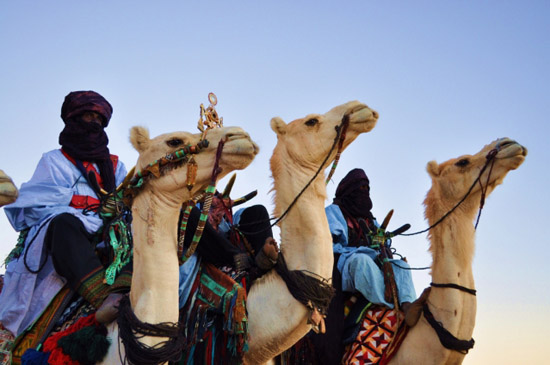
Mes propres remarques sont entre crochets []. Les quelques photos ajoutées ne font pas partie du dictionnaire. Enfin, j’ai traduit chacune des entrées en anglais.

*

The present glossary gathers several words/entries from the French-Tuareg Dictionary by Karl-G. Prasse et al. (2003) together with my English translation and a few personal remarks in brackets [].

*

B

ăbogaz : cousin croisé (fils de tante paternelle ou d’oncle maternel) ; par extension (p.ext.), cousin en général. On estime que les soins d’un cousin croisé sont particulièrement propices au traitement de certaines maladies, par ex. la teigne.

A cross-cousin (son of a paternal aunt or daughter of a maternal uncle); by extension, a cousin in general. It is thought that nursing by a cross-cousin is particularly favorable to the cure of some ailments such as ringworm.

ăbagən : espèce de petit crocodile vivant dans les mares. [Ils vivent coincés dans les oasis depuis la désertification.]

A species of small crocodile living in ponds. [They have been stuck inside oases ever since the desertification of these areas.]

ăboɣəlli : mulâtre. Les iboɣăllităn des Kel-Ataram ont un statut un peu supérieur à celui des eklan (esclaves) noirs.

A mulatto. The iboɣăllităn of the Kel-Ataram have a status slightly higher than that of black eklan (slaves).

boká (ha.) : guérisseur traditionnel.

Hausa traditional soothsayer.

băllăwri, băllăwli : sorte de pierre rouge translucide (de la région d’Agadez) ; p.ext. anneau de doigt en băllăwri.

A sort of red translucent stone (from Agadez region); by ext. a finger ring made of this stone.

abăngor : morve séchée ; lambeau de peau desséché (qui pend au bord d’une plaie) ; p.ext. nègre (terme de dérision).

Dry snot; a shred of dessicated skin (hanging from the edge of a wound); by ext. a negro (derogatory term).

bori (ha.) : fait d’être possédé par les esprits ; esprit, génie ; homme possédé par les esprits ; sorcier (allié avec les esprits) [Le bori est la religion préislamique des Haoussas, qui subsiste encore de nos jours.]

Possession by spirits; spirit, ghost; person possessed by spirits; sorcerer (in league with spirits) [Bori is Hausa people’s pre-Islamic religion, which has subsisted to this day.]

səbbərəg : se vanter ; montrer sa plénitude (chamelle) ; faire semblant d’être pleine (chamelle).

To boast; to show off one’s pregnancy (she-camel); to pretend being pregnant (she-camel).

abărăybăray : « gorille » (il n’y a pas de gorilles en pays touareg, mais les Touaregs en connaissent l’existence ; pour eux c’est un monstre qu’on rencontre parfois en brousse. On dit qu’il provoque l’homme à la lutte au corps à corps ; s’il gagne l’homme reste mort ou fou, si l’homme gagne le monstre lui donne une bague magique source de grande richesse, mais si l’homme répond à l’appel de son nom la bague perd sa puissance (D. Sudlow).) [J’ai du mal à comprendre en quoi cette description d’une sorte de lutin ou de gnome de conte de fées est la preuve que les Touaregs connaissent l’existence des gorilles. Pourquoi traduire par « gorille » ce personnage du folklore ? Hypothèse : les Touaregs ont probablement donné le nom de cette créature de leur folklore au gorille pour quelque ressemblance dont ils auraient entendu parler, et que rien ne révèle dans la description du dictionnaire (si ce n’est que le gorille est réputé attaquer les gens ?).]

A « gorilla ». (There are no gorillas in the Tuareg country, but Touaregs know their existence. For them it is a monster that one sometimes meets in the bush. It is said that it engages in hand-to-hand fights with the individuals he comes across; if it beats the man the latter is killed or becomes mad, if the man beats the monster the latter gives him a magic ring that brings riches and wealth, but if the man answers to his name being called the ring loses its power.) [Why such a fairytale sprite or goblin proves that Tuaregs know the existence of gorillas is beyond my understanding. Tuaregs probably gave the gorilla the name of this creature of their folklore from some resemblance they heard about and we are not aware of from the description (unless it is because gorillas are said to attack people?].]

abăybăya : habitant noir de la côte (Togolais, Béninois etc.) ; p.ext. personne maladroite.

A negro dweller of the coast (Togolose, Beninese etc); by ext. a clumsy person.

buzu (ha.) : esclave noir des Touaregs (parlant touareg).

Black slave of the Tuaregs (speaking Tuareg).

Băžubăle / Băžubăletăn : ancienne tribu berbère aujourd’hui tout à fait négrifiée et parlant haoussa, vivant dans la région de Kéita-Tahoua.

An ancient Berber tribe that is entirely negrified today and speaks Hausa, dwelling in the region of Keita-Tahoua.

D

emud ən-ḍan : la fête des chiens (fête où l’on tue un chien/des chiens ; célébrée certaines années chez les Kel-Faday, surtout à Agadez).

Dog festival (during which one or more dogs are killed; it is celebrated on certain years by the Kel-Faday, above all in Agadez).

tədda : farine de mil mouillée ; mil mal pilé (c’est un moyen des femmes pour engraisser). [Voici ce qu’écrit notre Simone de Beauvoir nationale au sujet de la graisse chez les femmes touarègues : « Autrefois les chefs [touaregs] gavaient leurs épouses au point que, pour forniquer ces blocs graisseux, il leur fallait le secours de plusieurs serviteurs. Ces temps étaient loin. » (La Force des choses, 1963) La pratique existe toujours, à tout le moins parmi les populations nomades de Mauritanie, sous le nom arabe dialectal de leblouh. Cf. ɣăbbăt-əffəz pour plus ample discussion.]

Wet millet flour; badly crushed millet (used by women to fatten). [Simone de Beauvoir writes the following about Tuareg women: ‘In the days of old Tuareg chiefs used to fatten their wives so much so that, in order to copulate with these boulders of fat they needed assistance from several servants. Those days are over.’ The custom has survived at least among the nomadic populations of Mauritania, where it is known, in dialectal Arabic, as leblouh. See ɣăbbăt-əffəz for more details.]

tadbəq : bâillon de sevrage pour les veaux ; état de respiration retenue ou sortant avec difficulté ; silence prolongé et volontaire (d’une personne) ; sorte de maladie vénérienne (mortelle, empêche l’éjaculation du sperme).

A muzzle for wheaning calves; a state of restrained or difficult breathing; prolonged, volontary silence (said of a person); a venereal disease (lethal, impedes ejaculation of semen).

Edăber / Idăberăn : tribu, littéralement (litt.) les tourterelles. Les Idăberăn comptent parmi les tribus touarègues les plus anciennes. [Pourquoi ce nom de tourterelles ?]

Name of a tribe, meaning ‘the turtledoves,’ among the most ancien. [Where does the name come from?]

mədədəqqət : se taper l’un l’autre dans la main (pour se passer des messages secrets).

To clap each other’s hands (in order to communicate secret messages).

dagəmi (ha.) : sorte de bracelet magique (tube de cuir rouge empli de bourre de tagăyt [palmier doum] ; protège contre les morsures de serpent).

A magic bracelet (a tube of red leather filled with doum palm floss; protects against snake bites).

adoməni : substance somnifère sécrétée par le mil (sous forme de gomme).

A soporific substance secreted by millet (in the form of gum).

Dăw-Ṣăhak : litt. « les fils d’Isaac », la plus grande tribu d’origine juive du pays touareg ; parlent un songhaï mélangé de touareg ; entretiennent désormais des relations avec l’ambassade d’Israël.

Litt. ‘the sons of Isaac,’ the greatest tribe of Jewish origin in the Tuareg country; they speak Songhay mixed with Tuareg; now have relationships with the state of Israel’s embassy.

uḍu : météorite (étoile filante) ; son d’un aérolite qui tombe (selon la croyance populaire c’est la mort violente d’une étoile) ; le son du ăga n-aṃan (son sourd et prolongé qui se produit parfois dans l’atmosphère et dont l’origine est inconnue ; se produit surtout la nuit ; présage de pluie) ; coup de tonnerre en général.

A meteor (shooting star); the sound of a falling meteor (in popular belief that is the sudden death of a star); ăga n-aṃan sound (prolonged, dull sound that is sometimes heard in the atmosphere and which origin is unknown; occuring mostly at night, it portends rain); thunderclap in general.

Il semble que la citation suivante évoque ce phénomène de « son sourd et prolongé qui se produit parfois dans l’atmosphère et dont l’origine est inconnue » : « De bizarres bruits, dans le soir qui tombait à grands pas, venaient de naître autour de nous. Espèces de craquements, suivis de plaintes longues et déchirées, qui se répercutaient à l’infini dans les ravins environnants. Il semblait que la montagne noire tout entière se fût mise soudain à gémir. … Comme moi, il comprenait, sans doute : les rochers surchauffés, le craquement de la pierre, toute une série de phénomènes physiques, le souvenir de la statue chantante de Memnon. » (Pierre Benoit, L’Atlantide, 1919)

ḍan-tyărara (ha.) : homme atteint de diarrhée ; sorte de clown sale qui vagabonde et salit les gens de diarrhée (dans les régions peuplées du sud).

A man suffering from diarrhea; a kind of dirty clown that roams about and soils people with diarrhea (in the populous regions of the south).

asədəs : chirotonie (imposition des mains pour guérison).

Healing by imposition of hands.

F

Fəhen, Nəhen : pays fictif des génies (ălžăynăn [djinns]).

Land of the jinns.

Fakru : nom d’une chamelle légendaire qui donnait du lait à tout le monde jusqu’à sa mort ; aussi confondue avec la chamelle du prophète Salih (Coran VII,75). => emənɣi-n-Fakru, « tueur de Fakru », espèce de singe cynocéphale (Papio nigeriae), également appelé emətti-n-Fakru « mangeur de Fakru ».

Name of a legendary she-camel who was giving her milk to everyone until her death; also conflated with prophet Salih’s camel (Quran VII,75). ‘Killer of Fakru,’ ‘eater of Fakru,’ a species of baboon.

tăfaršit (ar. fârisiyya « la persane ») : sorte d’encens extrait d’une plante importée (pour chasser les démons).

‘The Persian,’ a kind of frankincense extracted from an imported plant (to chase demons).

G

gobəz (ha. ?) : diable, mauvais esprit.

A devil, an evil spirit.

găfăkka (ha.) : sachet à Qoran (en cuir/toile pour transporter le Qoran).

A purse for the Quran (in leather or canvas to carry the Quran).

aggəl : graisse fondue ; graisse d’autruche fondue (sert d’onguent contre les rhumatismes).

Molten fat; molten ostrich fat used as ointment against rheumatism.

əgəllul : homme capable d’invoquer les esprits.

A man able to summon spirits.

tagələllet : cercle, rond ; marque de propriété des Ifəqqar (forgerons marabouts) des Kel-Geres.

Circle, round; property mark of the Ifəqqar (marabout blacksmiths) of the Kel-Geres.

guma, təgumat (ha.) : homme possédé de génies => tende n-gumatăan : tam-tam exécuté pour guérir des possédés en les amenant à la transe.

A man possessed by jinns. => tende n-gumataan: tamtam played to heal the possessed by bringing them to a trance.

Gənbəya : nom propre de femme, litt. femme courtaude et grasse, ou fille de chef [cf. tədda : la citation de S. de Beauvoir, ɣăbbăt-əffəz]

A woman’s name, lit. little, fat woman, or chief’s daughter. [See tədda, ɣăbbăt-əffəz]

tagənnəgənt : manière spéciale de parler touareg, consistant à intervertir l’ordre ses sons dans chaque mot et à intercaler certaines syllabes supplémentaires (d’après certaines conventions), langage secret.

A special manner of speaking Tuareg consisting in inverting the order of sounds in each word and in inserting some more syllables (according to some convention), secret language.

ăgar : espèce d’arbre non épineux (dégage une mauvaise odeur en brûlant) (Maerua crassifolia). L’ăgar est réputé être habité par les génies ; on évite de s’installer à son ombre sans avoir donné d’abord dans son tronc quelques coups de hache qui chassent les génies. Sa fumée est dangereuse et peut rendre aveugle. Les femmes en retraite visitent parfois un ăgar pour se décharger sur lui des obligations d’abstinence devenues trop lourdes.

A species of non-thorny tree (gives out a bad smell when burning). It is reputed to be the dwelling-place of jinns; people avoid sitting under it without having struck its trunk several times with an ax before in order to chase the jinns away. Its smoke is dangerous and can make one blind. Retreating women sometimes pay a visit to an ăgar to discharge themselves of abstinence obligations that have become too heavy.

agəru : grenouille ; crapaud ; espèce de croix en or ou argent portée par les femmes touarègues dans la coiffure (symbolise la fécondité ; bijou de noces traditionnel).

Frog; toad; a sort of cross made of gold or silver and borne by Tuareg women on their head (a symbol of fertility; traditional wedding gift).

Ăgori / Igorităn : Noir/nègre de la forêt vierge (de Nigeria etc.) (ne se dit pas des Noirs avec lesquels les Touaregs sont en contact quotidien).

A negro of the forest (Nigeria etc) (not used for black people whom Tuaregs meet daily).

ămăggerše : jeteur de sort par le mauvais œil. => oh əməggerši! exclamation servant à parer l’effet fâcheux d’une louange (en effet, les louanges trop ouvertes sont incorrectes).

A wizard with the power of evil eye. => oh emeggershi! An interjection which aims at warding off the unfortunate effect of a praise (excessive praises are deemed indecorous).

tagărăyyat : espère de lézard (jaune à traits noirs, puant ; les enfants le soupçonnent de téter les chèvres). [Cf. takəzukəzt]

A species of lizard (yellow with black stripes; foul-smelling; children believe that it sucks the goats.)

agəs : danser avec la tête et les mains (en position assise).

To dance with the head and hands while sitting.

təgəyye n-Yăḷḷa, tan-Yăḷḷa : goître. On dit que Dieu afflige d’un goître celui qui se parjure.

A goiter. It is said that God punishes perjury with goiter.

tagăzot : panse (des ruminants) => imawăn ən-tăgăzot : partie antérieure de la panse, « herbière » (revient aux forgerons).

Rumen. => imawan en-tagazot: forepart of the rumen (reserved to the blacksmiths).

igăzan : divination par des points faits sur le sable, géomancie.

Divination by making points on the sand.

agăzzăram : fouette-queue (espèce de lézard). Les Ouelleminden Kel-Ataram regardent ce lézard comme un génie.

A species of lizard considered by the Kel-Ataram to be a jinn.

Q

ɣăbbăt-əffəz : fait de prendre une bouchée et de la mâcher longuement ; gavage (d’une femme qu’on gave avec du lait à l’aide d’un biberon (aɣălla)). => aɣălla : gavoir (sorte de casserole en bois, avec manche à tuyau ; sert à gaver de lait les femmes adolescentes).

[Comme nous l’avons vu à l’entrée tədda, les Touaregs pratiquent de manière traditionnelle le gavage des filles (en particulier des filles de chef), qui deviennent de ce fait obèses. On lira avec profit l’article d’E. Bernus sur le sujet (en ligne sur L’Encyclopédie berbère : ici). Bernus considère que ce gavage permet aux filles de mûrir plus rapidement et donc de se marier plus tôt. L’obésité qui en résulte est chantée par les poètes touaregs comme étant un élément de la beauté féminine (Bernus cite quelques vers à cet égard). Selon la psychologie évolutionniste, un rapport métrique taille-hanche (waist-hip ratio, WHR) de 0,7 est perçu comme le plus attrayant en raison des capacités maximales de fécondité qu’il indique. Dans ce contexte, le fait que l’obésité passe pour un caractère désirable de la femme est une énigme. Cependant, Bernus a sans doute apporté la clé de cette énigme en indiquant qu’il s’agit d’avancer la maturité sexuelle des jeunes filles : de cette façon, il est possible d’accroître le taux de reproduction en réduisant l’écart temporel entre générations. Cette stratégie est viable à condition que le gavage ne nuise pas aux capacités reproductives de la femme (alors qu’en règle générale plus la taille de la femme s’éloigne du ratio 0,7, plus sa fertilité est compromise [à confirmer]) et que l’obésité ne joue pas négativement dans les préférences masculines. Or le fait que l’obésité de la femme soit une préférence des hommes touaregs est peut-être mise en doute par le terme əḳtər du dictionnaire de Prasse, traduit par « avoir une taille de guêpe (une femme) », ce qui laisse supposer que cette taille de guêpe est un marqueur de beauté chez les Touaregs également (l’expression « taille de guêpe » correspond à ce qui a été dit plus haut à propos du rapport taille-hanche : taille étroite et hanches larges). Photos : E. Bernus, article cité. 1/gavage d’une jeune fille 2/femme touarègue obèse : voir le bras.]

To chew lengthily; force-feeding or gavage (of a woman with milk and the help of a special ustensil) => a’alla : ustensil to force-feed adolescent women.

[As we saw under the head tedda, Tuaregs have been traditionally force-feeding their daughters (especially the daughters of chiefs). The women thus force-fed become obese. Bernus considers that the aim is to make girls achieve sexual maturity and marry earlier. Tuareg poets laud obesity as a marker of beauty and Bernus quotes a couple of verses to illustrate this. According to evolutionary psychology, a waist-hip ratio (WHR) of 0.7 is perceived as the most attractive owing to the greatest fertility that it indicates. In this context, that obesity should be a marker of beauty is puzzling. However, Bernus probably gave the key to the riddle: gavage allows Tuaregs to increase their rates of reproduction by reducing the time spread between generations. This strategy is valid on the proviso that gavage does not impair women’s fertility (whereas as a rule the greater the deviation from WHR 0.7, the less fertile the woman physiologically [ought to be confirmed]) and that obesity does not negatively affect males’ preferences. In this latter respect, the fact that Tuareg men prefer obese women may be doubtful given the word əḳtər in Prasse dictionary, translated as « to have a wasp waist (woman), » which seems to hint that a wasp waist is a marker of beauty among Tuaregs too (the phrase itself, wasp waist, can serve as a confirmation of the WHR idea wherever it is used, as in French too).]

tewăɣne : ligature ; lien ; paquet ; écriture liée (manière d’écrire les tifinagh qui les rend très difficiles à déchiffrer et servant à rédiger des messages secrets, consistant à lier les caractères entre eux d’une certaine manière convenue d’avance).

Ligature; link; parcel; longhand script (a manner of writing tifinagh characters that makes them very difficult to decipher and is used to write secret communications, consisting in attaching the characters to one another in a certain way agreed upon in advance).

eɣəri : cuivre rouge. On dit que le port d’un anneau de cuivre allège les rhumatismes.

Red brass. It is said that wearing a brass ring soothes rheumatism.

Aɣrəm-Səṭṭəfăn : nom d’un pays énigmatique d’où vint le premier sultan de l’Aïr. [Aɣrəm signifie ville et désigne également Agadez, « la ville ».]

Name of a mysterious country whence the first Sultan of Ayr came.

Qurăyš : nom de la tribu du Prophète Muhammad (Qurayshites). Beaucoup de tribus berbères se disent être des descendants du Prophète, certaines de droit.

Name of the Prophet Muhammad’s tribe. Many Berber tribes claim descendance from the Prophet, some rightly.

taɣəst : vieux volcan éteint.

An ancient, inactive volcano.

əɣsəb : calculer ; prédire l’avenir en consultant les esprits ; chercher la solution d’une énigme en consultant les esprits.

To compute; to foresee the future by consulting the spirits; to find the solution to a riddle by consulting the spirits.

aɣu-saḳa : espèce d’ogre (qui tue les chamelons) == ar. ‘ifrit (se manifeste à une seule personne, en brousse et dans la nuit, sous la forme de différents animaux qui crient ou beuglent, comme un taureau/chameau/mouton etc.)

A sort of ogre (who kills camel cubs). Same as ‘ifrit (Appears to one person at a time, in the bush and at night, in the form of several animals that utter their cries, such as bull, camel, sheep etc).

eɣăwel : homme noir d’origine esclave (anciens eklan vivant en liberté sous la protection de leurs anciens maîtres ; il existe des iɣăwelăn en dépendance des Kel-Denneg, des Kel-Ayer et des Kel-Geres).

A black man of slave origin (they are former eklan who live free under the protection of their former masters).

H

hăbbăy : avoir les lèvres fardées en noir ; femme aux lèvres fardées en noir. => hănbăy : avoir la bouche noire (âne) ; avoir la bouche fardée en noir (femme). [Le rouge à lèvres existe aussi de manière traditionnelle chez les Touaregs : cf. kălgo. Selon la psychologie évolutionniste, le rouge à lèvres permet aux femmes de simuler une caractéristique de l’excitation sexuelle et les rend par là-même attrayantes pour les hommes. Ainsi le rouge n’est-il pas un ornement arbitraire. Il ne paraît pas possible d’en dire autant du « noir à lèvres » des femmes touarègues et l’on ne saurait non plus considérer qu’elles cherchent à imiter les lèvres noires des ânes auxquelles s’applique également le terme selon Prasse. Et si c’est parce que l’excitation sexuelle noircit les lèvres des femmes à la peau mate tandis qu’elle rougit celles des femmes à la peau claire, pourquoi les femmes touarègues utilisent-elles également du rouge ? Serait-ce que les femmes touarègues à la peau mate, voire les Touarègues noires, utilisent du noir tandis que celles à la peau claire utilisent du rouge ?]

To have one’s lips painted black; a woman with painted black lips. => hanbay: to have a black mouth (donkey); to have one’s mouth painted black (woman). [Tuareg women also know rouge: see kălgo. According to evolutionary psychology, rouge is red because it simulates arousal. It is not arbitrary. It does not seem to be case with black tincture, yet both have been traditionally used by Tuareg women. What would be an evolutionary explanation for women blackening their lips? In case it is because arousal blackens the lips of dark-skinned women instead of reddening them, then why Tuareg women use rouge at all? Is it that dark-skinned Tuareg women use the black tincture while the fair-skinned use rouge?]

ehăles : mirage matinal.

A morning fata morgana.

Ehəti : homme libre d’origine songhaï-djerma. Les Songhaïs sont traités comme cousins des Touaregs.

A free man of songhay-zarma origin. The Songhays are treated like cousins by the Tuaregs.

K

təkabt : grand grigri frontal.

A large charm borne on the forehead.

ăkabba : sorte d’amulette frontale (en forme de banane, pour homme).

A kind of amulet borne on the forehead (in the shape of a banana, for men).

Akădămma / Ikădămmatăn : tribu métissée isolée appartenant à l’ancienne confédération des Ouelleminden Kel-Denneg, particulièrement célèbre pour la fabrication de talismans (guérisseurs ou prophylactiques). Ils sont dédaignés pour avoir fait de la fabrication de talismans un commerce.

An isolated half-bred tribe belonging to the ancient confederation of the Ouelleminden Kel-Denneg, well-known for the making of talismans (healing or prophylactic). They are despised for making a business of their talismans.

əkkuf : rhume ; grippe : p.ext. troubles respiratoires causés par la consommation excessive de sucre.

Cold (ailment); influenza; by ext. breathing difficulties caused by excessive sugar consumption.

ăkala : longe à nœud coulant ; p.ext. cicatrice de tatouage ethnique au visage.

A tether with a running knot; by ext. scars on the face as ethnic tattoo.

kălgo, kădăgo (ha.) : espèce d’arbre (de couleur brun clair ou chamois ; avec son écorce on tresse des cordes ; de sa racine on extrait un colorant rouge dont les femmes se fardent les lèvres) (Bauhinia reticulata).

A species of tree (light brown or chamois; with its bark rope is made; from its root is extracted a red dye with which women paint their lips).

kălăw : jeter un sort à, ensorceler (surtout : marabout, en écrivant un verset coranique).

To cast a spell on (especially a marabout by writing a verse of the Quran).

kenbəltyu : sorte de démon (Peul métamorphosé).

A kind of demon (a metamorphosed Fula).

ekərkəwi, ekərkəwwi : vampire (personne capable de sucer le sang d’une autre à distance et jusqu’à la mort ; sorte de sorcier).

A vampire (someone who can suck the blood of another from a distance until the person dies; a kind of sorcerer).

kərənbaski (ha.) : ceinture d’amulettes.

A belt of amulets.

iḳărănḳărăn : scarifications faites dans les narines d’une chamelle pour lui bloquer l’odorat et la forcer à accepter un chamelon étranger. [Le dictionnaire de Prasse connaît plusieurs autres techniques, dont certaines réversibles, pour obtenir le même résultat.]

Scars made on the nostrils of a she-camel in order to impair her sense of smell and force her to accept a stranger camel cub. [The dictionary knows various other techniques to the same end, some reversible.]

korti (ha.) : sorcellerie (consistant à frotter la peau de quelqu’un).

Witchcraft (consisting in rubbing someone’s skin).

tasăḳḳarăyt : sorte d’amulette (écrite pendant qu’on appelle à haute voix la personne anathémisée/envoûtée/maudite).

A kind of amulet (written down while calling loud the name of the person one wants to curse or bewitch).

ikas : chaud => ax iḳḳûsăn : lait chaud qui vient d’être trait (et qui répand la chaleur dans le corps entier du buveur).

Warm. => ah ikkusan: warm milk just after milking (it diffuses its warmth in the whole body of the person drinking it).

akătab : écriture => akătab n-iblis : écriture non sainte (se dit parfois de n’importe quelle écriture autre que l’arabe, y compris les tifinagh).

Script. => akatab n-iblis: unholy script (sometimes said of all scripts other than Arabic, including tifinagh).

akătar : couleur indigo de la peau [signe de beauté].

Indigo color of the skin [a marker of beauty].

aḳwa : goudron (fait à base de bois ; sert à traiter la gale) ; également fait à base de grains de coton qu’on brûle.

Tar (made of wood; used to cure scabies); also made of burnt cottonseeds.

kăwda : fruit sec (en général, goro sec) ; p.ext. amulette écrite qui empêche les blessures au combat.

Dry fruit (in general, dry goro); by ext. a written amulet that prevents wounds in battle.

kăygăro : grande ceinture munie d’amulettes.

A large belt with amulets.

takəzukəzt : vipère sauteuse (très venimeuse, sa morsure est mortelle dans 90 % des cas) ; espèce de lézard (grand, tacheté) (selon une fausse croyance populaire, il tète les chèvres en hivernage).

Jumping adder (very venomous, its bite is deadly in 90% of the cases); a species of lizard (large, spotted) (according to an erroneous popular belief, it sucks overwintering goats).

L

Ǝlquran : planchette sur laquelle sont inscrits des versets du Qoran. On dit : širəd Ǝlquran, laver une planchette coranique et donner la lavure à boire à un malade pour le guérir ou à un jeune guerrier pour le rendre invulnérable (marabout).

A wood board on which are inscribed verses of the Quran. => Shired al-Quran : to wash such a Quranic board and give the washing to drink to a diseased person in order to cure him or to a warrior to make him invulnerable.

eləw : éléphant. Les derniers troupeaux d’éléphants ont été observés dans l’ouest de l’Azawag vers 1885.

An elephant. The last elephant herds were observed in the west of the Azawag about 1885.

Ăyt-Lawe, At-Lawe, At-Lăway : tribu du groupe Dăw-Ṣăhak [voir ce nom] (d’origine juive ; parlent touareg mais gardent les coutumes juives).

A tribe of Jewish origin (they speak Tuareg but have maintained Jewish traditions). [See Dăw-Ṣăhak]

laya : nom d’un gri-gri (contient des verset coraniques ; rend les hommes invisibles aux djinns ; porté par les caravaniers de Balma).

Name of a charm (contains Quranic verses; makes its bearers invisible to the jinns; used by the caravan riders of Balma).

ălẓu : raser (barbe, tête etc.) => win laẓẓinen : les marabouts (litt. ceux qui se rasent la tête).

To shave (beard, head etc) => win lazzinen: the marabouts (litt. those who shave their heads).

M

imi n-ăḍaḍ : bout du doigt ; p.ext. nom du prix dû d’avance au marabout qui s’apprête à inscrire dans le sable, avec le bout de son doigt, une formule de guérison (pour guérir un malade éventuellement possédé par les djinns).

A fingertip; by ext. name of the prepaid earnings of the marabout who will inscribe on the sand, with his fingertip, an healing formula (to cure a diseased person perhaps possessed by jinns).

madak : espèce de plante (tue les serpents quand on la met à l’entrée de leurs gîtes) (Commicarpus helenae).

A species of plant (kills the snakes when placed at the entry of their lairs).

Ǝmrəwəlqis (ar. Imru’l-Qays) : nom d’un poète célèbre de l’Arabie préislamique. Selon une légende touarègue, il aurait été un roi géant des Arabes et aurait inventé les tifinagh ou au moins contribué à civiliser les Touaregs.

Name of a famous poet of pre-Islamic Arabia. According to a Tuareg legend, he was a giant king of the Arabs and invented the tifinagh or, at least, helped civilize the Tuaregs.

ămata : extenseur de puisette (branche insérée dans la puisette pour étendre celle-ci et puiser plus rapidement) ; p.ext. rameau suspendu à la tente d’une femme en couches (moyen magique qui doit lui faciliter l’ouverture du vagin).

Dipper extensor (a stick inserted in the dipper to extend it and allow faster dipping) ; by ext. a sprig hanging by the tent of a parturient woman (a magic tool that must facilitate the opening of her vagina).

Taməzgədda : secte mouridienne de l’Azawag (dont les membres viennent de plusieurs tribus). La secte islamique des Mourides est d’origine sénégalaise, fondée par le cheikh Ahmadou Bamba [Serigne Touba]. Connus pour faire des talismans (guérisseurs et prophylactiques).

A Mouride sect of the Azawag (which members come from various tribes). The islamic sect of the Mourides is of Senegalese origin, being founded by Cheikh Ahmadou Bamba. They are reputed for making talismans (healing and prophylactic).

eməžir : ancien emplacement d’un camp ou campement (les piquets sont souvent laissés sur place). On dit que les djinns habitent les campements abandonnés et frappent ceux qui s’y aventurent. P.ext. ruine, vestiges archéologiques.

The former site of a camp (the posts are often left behind). It is said that the jinns dwell in abandoned camps and strike those who tread those places. By ext. a ruin.

răṃa : chanvre indien (Hibiscus cannabinus) ; fibres de chanvre (servent notamment à confectionner des liens et à tresser les tresses artificielles des femmes haoussa).

Hemp; hemp fibres (used among other things to make ties and the artificial braids of Hausa women).

tiṛăwt : lettre (missive) ; amulette écrite (contenant un verset du Qoran) => tiṛăwt n-ăḷăm : talisman pour chameau (suspendu au cou) ; Šiṛăwt ən-Tăḷămt : nom de l’étoile Alcor, dans la Grande Ourse (litt. Amulette coranique de la chamelle).

A letter (missive); a written amulet (containing a verse of the Quran) => tirawt n-alam: an amulet for camels (hanging from the neck); Sirawt en-Talamt: name of the star Alcor.

ăṛwa : sorte de danse frénétique des Haoussa (pour exorciser les mauvais génies ?) [Le point d’interrogation est de K.-G. Prasse.]

A kind of frenetic dance among the Hausas.

S

Săqqăra (ar. Saqar) : l’Enfer glacé (le centre glacé de l’Enfer, considéré comme le plus dur des enfers). [Il me paraît douteux que ce soit là le sens de l’arabe Saqar, qui est bien une région de l’enfer mais dont je ne trouve pas qu’elle soit glacée. S’agit-il d’une particularité touarègue ou d’une erreur d’interprétation des auteurs du dictionnaire ?]

The Hell of ice (the icy core of Hell, considered the harshest of hells). [I do not think that the Arabic Saqar, although it is the name of a region of hell, has this meaning. Is this a Tuareg particularity or an error of the authors?]

sonti (ha.) : mot lâché involontairement pendant le repas. L’étiquette touarègue demande qu’on mange dans un silence absolu. Le sonti est considéré comme dû au plaisir excessif de manger, sentiment qui est en soi illicite et ridiculisé. On se moque à l’amiable de celui qui commet un sonti en famille, alors qu’en présence d’étrangers l’acte est impardonnable.

A word uttered involuntarily durint the meal. Tuareg etiquette demands that people eat in absolute silence. The sonti is said to be caused by excessive pleasure in eating, a sentiment that is illicit and ridiculed. In the family the person making a sonti is gently mocked, but in the presence of strangers the act is inexcusable.

tasăsḳot : tombeau ; cimetière. On dit que les djinns habitent les cimetières et qu’il est dangereux de s’y aventurer la nuit.

A grave ; a graveyard. It is said that jinns dwell in the graveyards and that it is dangerous to roam in them at night.

ăssăxar (ar.) : sorcellerie ; spécialement, eau contenant les lavures d’une planchette couverte de versets coraniques (bue à des fins magiques). [Cf. Ǝlquran]

Witchcraft; especially, water containing the washing of a plate covered with Quranic verses (which one drinks for magic effects).

Š

əmaši : cadavre d’un animal tombé dans un puits (fennec, écureuil, chat, rat, zorille ; capable d’intoxiquer l’eau et de la rendre imbuvable pour tous les animaux sauf le chameau).

The corpse of an animal inside a well (fennec, squirrel, cat, rat, zorilla; likely to poison the water and make it undrinkable for all animals except the camel).

šaro (peul) : épreuve de flagellation (rite d’initiation des jeunes Peuls) ; escrime (avec bouclier).

The ordeal of flogging (initiation rite of the young Fula); fencing (with shield).

šet-ălxer : nom de l’encens donné par le bdellium brûlé (sert à chasser les djinns). [Cf. tăfaršit]

The frankincense made from bdellium (used to chase the jinns away).

T

təfatəfa : raclures d’encre (du Qoran ; bues diluées dans l’eau comme remède protecteur contre les maux de toutes sortes) [Cf. Ǝlquran, ăssăxar] ; crachats de bénédiction (petits crachats de salive d’un marabout, sur la tête de son élève).

Ink scrapings (from the Quran; they are drunk delayed in water as a remedy against all kinds of ailments); blessing sputum (small sputum spat by a marabout on the head of his disciple).

əttəhlul (ar. enveloppe) : livret religieux (miniature) (sert d’amulette ; normalement ce livret contient des versets du Qoran).

Religious booklet (used as amulet; normally the booklet gathers verses from the Quran).

W

awəṇṇəwən : lieu sacré, lieu habité par les esprits saints : spéc. sépulture néolithique en forme de tour en pierres.

A sacred place, a dwelling place of the holy spirits; espec. a neolithic grave in the shape of a stone tower.

Y

tăyṭṭăft : esp. de fourmi (grande, noire, fait des magasins de grains). On dit que les fourmilières sont habitées par les djinns. Les femmes captives qui en excavent le grain doivent se taire complètement pendant cette opération, sinon elles risquent d’être frappées par les génies.

A species of ant (large, black, builds stores of seeds and grains). It is said that anthills are inhabited by jinns; captive women who dig the grains from them must remain completely silent during the operation lest the jinns strike them.

Z

ize-n-ălžănnăt : (litt. mouche du Paradis) esp. de mouche bleu-violette. On dit qu’elle augure la richesse à celui sur qui elle se pose.

« Fly of Paradise, » a species of bluish-purple fly. It is said to augur wealth for those on whom it alights.

Azubăya / Izubăyatăn : membre d’un peuple légendaire d’idiots vivant dans la mer ; idiot.

A legendary people of cretins living under the sea; a cretin.

ezăgăz : fennec (renard saharien). On dit que les lieux où se trouvent les terriers des fennecs sont habités par les djinns et dangereux la nuit.

A fennec fox. It is said that the places where fennec foxes have dug their burrows are inhabited by jinns and dangerous at night.

tazlaft : corbeau noir ; p.ext. augure de bonne fortune (signe faste en géomancie) ; parole de magicien.

A black crow; by ext. a good omen; the words of a magician.

aẓəkka : tombe. Les tombes se font normalement dans les endroits pierreux.

A grave. Graves are usually made in stony ground.

teẓma : pouvoir magique des forgerons ; pouvoir de maudire.

Magic power of the blacksmiths; the power to cast a curse.

Ž

Žəbəkeli : nom d’un djinn qui habite un bois de la vallée de Tadist (arrache brutalement les entraves des chameaux qui y paissent).

Name of a jinni that dwells in the Tadist valley (it tears off the hobbles of the camels that graze there).

žabal nâr : volcan (considéré comme porte de l’Enfer).

A volcano (considered a gate of Hell).

ăžobbar, əžabbar (ar.) : homme géant de l’époque préhistorique. On dit que les fantômes des ižobbarăn occupent toujours leurs tombeaux et sont une sorte de djinns.

Giant people of prehistoric times. It is said that their ghosts still haunt their graves and are a kind of jinns.

ăžoggam : grande route ; trace de géant (empreinte de pied présumée laissée par un géant préhistorique).

A highway; a footprint allegedly left by a prehistoric giant man.

Enregistrer

Enregistrer

Thai-Sanskrit

Thai Words of Sanskrit Origin
This is a first installment (or rather I shall complete the list directly here). All apologies for the bareness of this temporary presentation. The entries are not classed (a few words have been clustered together, though, due to their semantic proximity): please use the search function of your computer to find a specific entry.
Thai language is replete with Sanskrit words. Many a Thai word in the list below is not the commonest word, but a more poetic or literary form, or a more specialized one; I then provide in brackets the main Thai synonym (sometimes it is only an approximate one), beside the English word. In that manner, the list can serve as a Thai-Thai dictionary as well.
Feel free to also visit the page “Sanskrit-Based Indonesian-Thai-Urdu Correspondences” here.
Buddha, The Awakened One TH พุทธ SK बुद्ध
Emerald TH มรกต SK मरगत, मरकत maragata, marakata => พระแก้วมรกต The Emerald Buddha
Ganesha TH ฆเนศ SK गणेश
Temple, Monastery (วัด) TH วิหาร SK वीहार vihara
Temple, Monastery ii TH อาวาส from SK आवास abode, residence / avasa => อาวาสิก monk (“resident” in SK)
Meditation TH ภาวนา SK भावन bhavana
Karma TH กรรม SK कर्म action (activity)
Deva, a God TH เทวา, เทพ SK देव
Devi, a Goddess TH เทวี, เทพี SK देवी
Devapati, Lord of Gods, a name of Indra TH เทพบดี SK देवपति
Temple; Abode of Gods TH เทวาลัย SK देवालय devalaya
Shrine, Altar, Temple TH เทวาคาร SK देवागार devagara
Deity TH เทวดา SK देवता, दैवत deity, god / devata, daivata
Deity ii TH นิรชร SK निर्जर also immortal; ambrosia or nectar (amrit) / nirjara
Demon TH ปิศาจ, ปีศาจ SK पिशाच pishacha
Ghost (ผี) TH ภูต SK भूत bhuta
Bhutapati, King of Ghosts (เจ้าแห่งผี), Lord of Beings (เจ้าแห่งสรรพสัตว์), a name of Shiva TH ภูตบดี SK भूतपति (in Sanskrit भूत means both a ghost and any living being)
Ghost ii TH เปรต SK प्रेत preta
Naga TH นาค SK नाग
Vasuki, King of the Nagas TH พาสุกรี SK वासुकि
Heaven TH สวรรค์ SK स्वर्ग svarga
Hell TH นรก SK नरक naraka
Hell ii TH นิรย SK निरय niraya
Giant TH ยักษ์ SK यक्ष type of demi-god (subdivision among the vyantara gods); ghost, spirit / yaksa
Rahu TH ราหู SK राहु eclipse; The Seizer
Ketu, personification of the moon’s descending node (Rahu personifying the ascending node) TH เกตุ SK केतु
Eclipse TH อุปราคา SK उपराग uparaga
Atom (อะตอม from Engl.) TH ปรมาณู SK परमाणु paramanu
Daitya TH แทตย์ SK दैत्य daitya; son of diti
Asura TH อสูร SK असुर, आसुर
Vetala, Goblin, Vampire TH เวตาล SK वेताल
Kumbhanda, Demon, Giant TH กุมภัณฑ์ SK कुम्भाण्ड
Danava TH ทานพ SK दानव a class of demons, implacable enemies of the devas
Garuda TH ครุฑ SK नरूड
Garuda ii; Chief of the Birds (เจ้าแห่งนก) TH ขเคนทร์ SK खगेन्द्र khagendra
Apsara TH อัปสร, อัจฉรา SK अप्सरस् apsaras, wives of the gandharvas; fairy; nymph
Apsara ii TH นิรชรา from SK निर्जर immortal / nirjara
Hanuman TH หนุมาน SK हनुमन् => หินเขี้ยวหนุมาน “Hanuman’s fangs stone,” i.e., amethyst
Vishnu TH วิษณุ SK विष्णु
Monastic Cell TH กุฎี SK कुटी kuti
Nirvana TH นิพพาน SK निर्वाण
Suppression of Pain, Nirvana ii TH นิโรธ SK निरोध niradha
Deliverance TH วิมุตติ SK मुक्ति, उन्मुक्ति mukti, unmukti
Arahant TH อรหันต์ SK अर्हन्त (arhanta) a. worthy n. Buddhist mendicant
Bodhisatva TH โพธิสัตว์ SK बोधिसत्व
Brahma TH พรหม SK ब्राह्म
Brahmacarya TH พรหมจรรย์ SK ब्रह्मचर्य
Brahmaloka TH พรหมโลก SK ब्रह्मलोक
World TH โลก SK लोक loka
Worldly TH โลกิยะ SK लोक्य lokya
World ii TH ภพ SK भव bhava
Man TH มนุษย์ SK मनुष्य manushia
Man ii TH บุรุษ SK पुरुष purusha
Scoundrel (คนเลว) TH กาบุรุษ SK कापुरुष kapurusha
Man iii TH นร, นฤ SK नर, नृ nara
Lion-Hearted Man, Great Warrior TH นรสิงห์, นรสีห์ SK नरसिंह + fourth incarnation of Vishnu: man-lion / nara-simha
King TH ราช SK राज raja
King ii TH มหาราช SK महाराज maharaja
King iii TH นรราช SK नरराज nara-raja
King iv TH อธิราช SK अधिराज adhiraja
King v TH นรเทพ, นฤเทพ SK नरदेव “man-god” / nara-deva
King vi TH ภูภุช SK भूभुज् bhubhuj
King vii TH นฤป SK नृप nripa
Queen TH มเหสี SK महिषी mahishi
Yama, God of Death TH ยม SK यम
Messenger of Death TH ยมฑูต SK यमदूत Yama’s messenger or minister / yamaduta
Yamaloka TH ยมโลก SK यनलोक
Caste TH วรรณะ SK वर्ण varna
Varuna TH วรุณ SK वरुण
Dharma TH ธรรม SK धर्म
Abidharma TH อภิธรรม SK अभिधर्म dogmas of Buddhist philosophy
Dharma War; Honest Fight TH ธรรมยุทธ์ SK धर्मयुद्ध dharma-yuddha
Dharmaraja, Prince of Dharma, Lord Buddha TH ธรรมราชา SK धर्मराज
“Dharma Body,” Holy Stupa TH ธรรมสรีระ SK धर्मशरीर dharma-sharira
Bad, Evil TH อธรรม SK अधर्मा adharma
Dharmic, Righteous TH ธรรมิก SK धर्मिक dharmika => ธรรมิกสังคมนิยม “Dharmic Socialism” (Buddhadasa Bhikku)
Patala, The Netherworld TH บาดาล SK पाताल
Mara TH มาร SK मार The Evil One
Death (ความตาย) TH มัจจุ SK मृत्यु mrityu
Death ii; God of Death; Planet Uranus TH มฤตยู from SK मृत्यु also Death personified / mrityu (same SK as above)
Death iii TH มรณะ SK मारण marana
Characteristic (n.) TH ลักษณะ SK लक्षणा laksana
Jataka TH ชาดก stories of the former incarnations of the Lord Buddha SK जातक (also astrological calculation of a nativity)
Penance TH ตบะ SK तपस्या tapasya
Poet TH กวี SK कवि kavi
Poem (บทกวี) TH กาพย์ SK काव्य kavya
Epic (n.) TH มหากาพย์ SK महाकाव्य mahakavya
Kinnara TH กินนร mythical being, half-human half-bird SK किंनर mythical being, with head of a horse
Kinnari, Female Kinnara TH กินรี, กินริน SK किंनरी
Kimpurusha TH กิงบุรุษ SK किन्पूरुष (for a more detailed presentation of kinnara, kinnari and kimpurusha, see my Thai Mysteries here)
Gandharva, celestial musician TH คนธรรพ์ SK गन्धर्व + TH คนธรรพวิวาห์ become husband and wife without marriage (SK गान्धर्व marriage which requires only mutual agreement)
Veda, Knowledge TH เวท SK वेद
Rigveda TH ฤคเวท SK ऋग्वेद
Samaveda, Third Veda TH สามเวท SK सामवेद
Yajurveda TH ยชุรเวท SK यजुर्वेद
Tomorrow (วันพรุ่งนี้) TH ศวัส SK श्वस् + particle implying auspiciousness / shvas
Welfare, Well-Being TH สวัสดิ์ SK स्वस्ति svasti
Svastika TH สวัสติกะ SK स्वस्तिक
Raksasa, Ogre TH รักขสะ,รากษส SK राक्षस (one of the 8 classes of vyantara gods)
Linga TH ลึงค์, ลิงค์ SK लिङ्ग
Sangha TH สงฆ์ the community of Buddhist monks SK सङ्घ association, group, assembly
Sudra TH ศูทร SK शूद्र
Eight TH อัฐ SK अष्ट ashta
Cloud TH เมฆ SK मेघ megha => เมฆินทร์ “Indra’s cloud” or “Indra cloud” = cloud
Cloud ii; Solid TH ฆน + ฆนะ solid SK घन ghana
Hail (n.) (ฝนลูกเห็บ) TH ฆโนบล SK घनोपल “cloud-stone” ghanopala
Hail ii, Hailstone TH กรก SK करक, करका karaka
Thunder (ฟ้าร้อง) TH ฆนศัพท์ SK घनशब्द “clouds’ sound” ghanashabda
Dark as a Cloud i.e. Rama TH ฆนศยาม SK घनश्याम ghanashyana
Rain(-Water) TH ฆนวารี SK घनवारि ghanavari
Cloud iii TH วาริท, วาริธร SK वारिद, वारिधर varida, varidhara
Cloud iv TH ปโยชนม์ SK पयोजन्मन् payojanman
Cloud v; Woman’s Breast TH ปโยธร SK पयोधर “containing water, or milk” also cocoanut / payodhara
Cloud vi TH อัมพุท SK अम्बुद ambuda
Bone (burnt bone relic) TH อัฐิ SK अस्थि bone / asthi
Hamsa TH หงส์ mythical swan-like being; swan SK हंस
Lotus (ดอกบัว) TH อัมพุช (cf อัมพุชินี) SK अम्बुज “water-born” / ambuja
Lotus ii TH ปัทม์, ปทุม SK पद्म padma
Lotus iii TH กมล + heart SK कमल kamala => โกมล ว. อ่อม, หวาน, งาม น. ดอกบัว
Lotus iv TH อรพินต์ SK अरविन्द also copper / aravinda
Lotus v TH นีรช SK नीरज “water-born” / niraja
Lotus vi TH กช SK कज kaja
Lotus vii TH บงกช SK पङ्कज “born in the mud” / pangkaja (cf. Mud)
Blue Lotus TH บุษกร, ปุษกร SK पुष्कर pushkara
Blue Lotus ii TH นิลปัทม์ SK नीलपद्म nilapadma
Red Lotus TH โกมุท, กมุท SK कुमुद kumuda
Red Lotus ii TH ประวาลปัทม์ SK प्रवालपद्म “coral lotus” / pravala-padma = = อรุณกมล “dawn lotus” (cf. Dawn)
Lotus Flower; White Lotus TH บุณฑริก, ปุณฑริก also name of a species of elephant SK पुण्डरीक white; lotus flower / pundarika
Lotus Pond TH นลินี SK नलिनी nalini
Lotus Pond ii TH อัมพุชินี from SK अम्भोजिनी a place where lotus flowers abound / ambhojini
Aquatic, Produced in water TH อุทช SK उदज udaja = Lotus
“Lotus-eyed,” having eyes as beautiful as the lotus flower TH กมลากษ์ SK कमलाक्ष kamalaksa = TH กมลเนตร SK कमलनेत्र kamalanetra
“Lotus-born,” a name of Brahma TH กมลโยนิ SK कमलयोनि kamalayoni
Padmapani, i.e. holding a lotus in his hand, a name of Vishnu TH ปัทมปาณี SK पद्मपाणि
Mud (โคลน) TH บงก์ SK पङ्क pangka
Vimana TH วิมาน, พิมาน SK विमान
Trunk (elephant) TH หัตถ์ from SK हस्त hand / hasta
Bee (ผึ้ง) TH ภมร SK भ्रमर bhramara
Bee ii TH ภมรี SK भ्रमरी bhramari
Bee iii TH มธุปะ SK मधुप madhupa
Honey (น้ำผึ้ง) TH มธุ SK मधु madhu
Jewel TH มณี (cf อัญมณี) SK मणि, मणिक  mani, manika
Gemstone, Precious Stone (เพชรพลอย) TH รัตน์, รัตนะ (cf ตรีรัตน์) SK रत्न ratna
Gem, Jewel TH มณีรัตน์ SK मणिरत्न maniratna => ม่วงมณีรัตน์ Bignonia magnifica, glowvine
Diamond TH เพชร, พัชร SK वज्र, वच्र diamond; thunderbolt (Indra’s weapon) / vajra
Diamond ii; Lightning (ฟ้าแลบ) TH วชิระ, วิเชียร SK वज्र (same as above)
Sapphire TH นิล SK नील nila
Sapphire ii TH มหานิล SK महानिल mahanila
Sapphire iii TH นิลรัตน์ SK नीलरत्न nilaratna
Ruby (ทับทิม) TH ปัทมราค, ปัทมราช SK पद्मराग = lotus-hued / padmaraga
Ruby ii TH กุรุพินท์, กรพินธุ์ SK कुरुविन्द kuruvinda
Topaz TH บุษบราค, บุษปราค SK पुष्पराग = flower-hued / pushparaga
Pearl (ไข่มุก) TH มุกดา, มุตตา SK मुक्त mukta
Beryl, Cat’s Eye TH ไพฑูรย์, พิฑูรย์, วิฑูรย์, ไวฑูรย์  SK वैडूर्य vaidurya, वज्रतुल्य “resembling a diamond” / vajra-tulya
Pomegranate TH ทับทิม also ruby SK दाडिम dadima
Pomegranate ii TH มณีพืช SK मणिबीज “jewel plant” / manibija
Sun TH อาทิตย์ SK आदित्या, आदित्य aditya
Sun ii TH สุริยะ SK सूर्य surya
Sun iii TH รวิ, รวี, รพิ, รพี, รำไพ SK रवि ravi
Sun iv TH สุร SK सुर sura
Amrit TH อมฤต SK अमृत => อมฤตรส “amrit-tasting,” i.e., teaching of the Buddha
Hermit TH ฤๅษี SK ऋषि rshi
Erawan, Indra’s Elephant (with three or, sometimes, thirty-three heads) TH เอราวัณ, ไอราวัณ SK ऐरावण
Elephant (ช้าง) TH หัตถี SK हस्ती “having a trunk” / hasti
Elephant ii TH คช SK गज gaja
Elephant iii TH กรี SK करी “having a trunk” / kari
Elephant iv TH สินธุระ SK सिन्धुर sindhura
Elephant v TH วารณ- SK वारण varana
Elephant vi TH ทวิทนต์ SK द्विदन्त “two-tusked” / dvidanta
Elephant vii TH นาค SK नाग naga
Elephant viii  TH กุญชร SK कुञ्जर + anything preeminent in its kind / kunjara => มุนิกุญชร from SK “the preeminent sage,” muni-kunjara, name of the Buddha (see Holy Man, Sage)
Elephant ix TH กเรณุ SK करेणु karenu
Elephant x TH ทวิป SK द्विप dvipa
Elephant xi TH ทวิรท SK द्विरद “two-tusked” / dvirada
Royal Elephant (พญาช้าง) TH กรินทร์ SK करीन्द्र large elephant of war or state elephant; Indra’s elephant / karindra
Female Elephant TH กิริณี SK करिणी karini
Black (a.) (สีดำ) TH กาฬ SK काल kala => กาฬหัตถี “black elephant,” a species of elephant (see Thai Mysteries here)
Black ii, Dark TH ศยาม SK श्याम shyama (hence Thailand’s former name: Siam)
Maya, Illusion TH มายา SK माया
Love, Desire TH กาม SK काम kama
Pleasure; Love TH รดี, รตี SK रति rati
Passion, Love, Lust, Desire TH ราค SK राग raga
Love (motherly etc) TH เสน่หา (n & v) SK स्नेह (n) sneha
Gold (ทองคำ) TH กาญจน์, กาญจนา SK काज्चन kajchana
Gold ii TH หิรัณย์ + silver SK हिरण्य hiranya
Gold iii TH เหม SK हेमन् heman => เหมหัตถี “golden elephant,” a variety of elephant
Gold iv TH ชมพูนท, ชมพูนุท, ชัมพูนท, ชามพูนท purest gold SK जाम्बूनद gold from the Jambu river; any gold / jambunada
Gold v TH กนก also name of a Thai design made of double curves SK कनक kanaka
Skull, Head (กะโหลก) TH กบาล SK कपाल kapala
Head ii TH ศีรษะ SK शिर्ष shirsha
Metal TH โลหะ SK लोह loha
Buffalo TH มหิษ, มหิงส์, มหิงสา SK महिष mahisha
Buffalo ii TH ลุลาย SK लुलाय lulaya
Crown, Tiara, Diadem TH มกุฎ, มงกุฎ SK मुकुट mukuta
Mandala; Province TH มณฑล SK मण्डल
Ink (หมึก) TH มสิ SK मषी mashi
Mantra TH มนตร์, มนต์, มนตรา SK मन्त्र
Jasmine (royal jasmine) TH มาลาตี SK मालती malati
Jasmine ii TH มะลิ SK मल्लि malli
Jasmine iii (Jasminum sambac) TH มัลลิกา SK मल्लिका mallika
Night (กลางคืน); Turmeric (Night Blooming Jasmine, Night Jessamine) TH ราตรี SK रात्रि ratri
Night ii TH รัตติกาล SK रात्रिकाल night-time / ratri-kala
Night iii TH นักตะ SK नक्त nakta
Night iv TH นิศา SK निशा nisha
Friend (เพื่อน), Ally TH มิตร SK मित्र mitra
Source, Origin TH มูล SK मूल mula
Name (ชื่อ) TH นาม, นามา SK नामन् naman
Bird (นก) TH ปักษี, ปักษา SK पक्षिन् bird=winged / paksin from पक्ष wing (of a bird)  / paksa
Bird ii TH ศกุน, ศกุนต์, สกุณ, สกุณา SK शकुन, शकुन्त shakuna, shakunta
Bird iii; Brahma TH ทวิช, ทิช SK द्विज “twice born” / dvija
Bird iv TH วิหค SK वीहग vihaga
Magpie TH สาลิกา from SK सारिका kind of bird, talking bird / sarika
Sign of the Zodiac TH ราศี SK राशि rashi
Form, Appearance TH รูป SK रूप rupa
Science TH วิชา SK विज्ञान vijjana
Science ii TH ศาสตร์ SK शास्त्र shastra
Science iii TH วิทยา SK विद्या vidhya
Letter of Alphabet TH อักษร SK अक्षर aksara
Body TH กาย SK काय kaya
Body ii (ร่างกาย) TH สรีระ SK शरीर sharira
Body iii TH วปุ, พบู SK वपु vapu
Light, Radiance (แสง) TH ศิริ, ศรี SK श्री shri
Light ii TH อาภา SK आभा abha
Ray of Light TH รัศมี SK रश्मि rashmi
Enemy (n.) TH ศัตรู SK शत्रु shatru
Enemy ii TH ริปุ, ริปู SK रिपु ripu
Enemy iii TH อริ SK अरि also hostile planet / ari
Enemy iv; Adversary, Opponent; Opposing TH ปฏิปักข์ SK प्रतिपक्ष pratipaksa
Minister TH มนตรี SK मन्त्रिन् mantrin
King’s Minister; Government Officer TH อำมาตย์ SK अमात्य amatya
Faithful TH สัตย์ SK स्थायिन् sathyan
Happy TH สุข from SK सुख happiness, delight / sukha
Pike, Spear (หอก, หลาว) TH ศูละ SK शूल shula
Trident TH ตรีศูล SK त्रिशूल Shiva’s weapon / trishula
North (เหนือ)TH อุดร SK उत्तरा uttara
South (ทิศใต้) TH ทักษิณ SK दक्षिण daksina
Family, Clan TH วงศ์ SK वंश vamsha => วงศาคณาญาติ relatives, kin
Family ii TH กุล, กุล- SK कुल kula
Family iii, Lineage TH สกุล from SK सकुल having a family; belonging to one family / sakula
Language TH ภาษา SK भाषा bhasha
Danger TH ภัย SK भय bhaya
Vessel TH เภตรา SK पोत्र ship or boat, पात्र vessel / petra, patra
Ship (เรือ)TH นาวา SK नाव nava
Baghavat TH ภควัต, ภควันต์, ภควาน SK भगवत् (see Sanskrit-Based Indonesian-Thai-Urdu Correspondences here) / bhagawat
Poison, Venom TH พิษ SK विष visha
Earth, Land, Ground, Soil TH ภู SK भू bhu
Earth ii, Ground TH ภูมิ SK भूमि bhumi
Earth iii TH ธรณี SK धरणी dharani
Earth iv TH ปฐวี, ปฐพี, ปถวี SK पृथिवी, पृथ्वी prithivi, prithvi
Earth v TH มหิดล SK महीतल mahitala
Earth vi TH ภูดล SK भूतल bhutala
Wheel (ลูกล้อ), Circle TH จักร SK चक्र chakra
Wheel ii, Discus TH อริน SK अरिन् arin
Circle ii, Cycle TH วัฏ-, วัฏฏะ also the wheel of death and birth in Buddhism SK वृत्त vritta
Goer (used in compound nouns) (ผู้ไป, ผู้ถึง) TH คามี SK गामी gami => วัฏคามี person who stays bound to the wheel of death and birth cf. Circle (previous entry), นิพพานคามี person who attains Nirvana
Circular, Globular TH วัฏฏิ SK वटिन् vatin
Samsara TH สงสาร SK संसार = สงสารวัฏ “samsara circle” cf. Circle ii
Moon TH จันทร์ SK चन्द्र chandra
Moon ii TH วิธู SK विधु vidhu
Moon iii TH อินทุ SK इन्दु indu
Moon iv TH นิศามณี, also นิศารัตน์ SK निशामणि “jewel of the night”; in Sanskrit a name of the firefly also / nishamani
Moon v TH ศศิ SK शशिन् “containing a hare,” i.e. the moon / shashin (cf. Rabbit)
Moon vi TH ศศิมณฑล from SK शशिमण्डल disk (mandala) of the moon / shashimandala
Waning Moon TH กาฬปักษ์ from SK kala: black, dark & paksa: side, position
Tchandala TH จัณฑาล SK चण्डाल (see Sanskrit-Based Indonesian-Thai-Urdu Correspondences here)
Sandalwood TH จันทน์ SK चन्दन chandana
Red Sandalwood (จนทน์แดง) TH หรคันธ์, หริจนทน์ from SK हरिचन्दन yellow sandalwood (!) (fr. हरि pale yellow) / harichandana
Red Sandalwood ii TH ประวาลผล used as medicine in Thailand SK प्रवालफल “coral fruit” / pravala-phala
Ivory, Tusk, Tooth TH ทันต์ SK दन्त danta = นาคทัดต์ (cf Elephant vii)
Tusk ii, Fang (เขี้ยว) TH ทาฐะ, ทาฒะ SK दाढा + molar / dadha
Evil, Wickedness; Punishment, Penalty; Blame (v) TH โทษ SK दोष dosha
Sorrow, Pain TH ทุกข์ SK दू:ख duhkha
Dust, Powder (ฝุ่น, ผง) TH ธุลี SK धूलि dhuli
Mountain (ภูเขา) TH คีรี, คิริ, คิรี SK गिरि giri
Mountain ii TH นค-, นคะ SK नग naga
Mountain iii TH กันทรากร SK कन्चराकर kandarakara
Mountain iv TH บรรพต SK पर्वत parvata
Mountain v TH ศิขริน, ศิขรี, ศิงขริน, ศิงขรี SK शिखरिन् “peaked, crested” / shikharin
Top, Peak, Mountain Peak TH ศิขร, ศิงขร SK शिखर shikhara
Constant, Steady (ไม่คลอนแคลน); Mountain vi TH อจล SK अचल achala
Virtue TH คุณ SK गुण guna
Virtue ii, Good Deeds TH กุศล SK कुशल kushala
Evil Deed, Sin (บาป); Inauspicious TH อกุศล SK अकुशल akushala (negative of the previous entry)
Sin TH บาป SK पाप papa
Guru, Teacher TH ครู SK गुरु
Woman (ผู้หญิง) TH สตรี, อิสตรี, อิสัตรี SK स्त्री stri
Lady TH กุลสตรี SK कुलस्त्री kulastri
Woman ii TH นรี, นารี SK नारी nari
Woman iii; Bride; Wife TH พธู SK बधू a bride or newly married wife / badhu
Woman iv TH ฉายา SK जाया jaya
Beautiful Woman TH รมณี SK रमणी aloe vera, beautiful young woman, wife, mistress / ramani
Beautiful Woman ii TH กมลา (+ พระลักษมี) SK कमला excellent woman / kamala
Virtuous Woman TH สตี SK सती sati
Beloved TH กานต์ SK कान्ता kanta => กานดา: หญิงที่รัก
Darling, Beloved ii (ที่รัก) TH ปรียะ, ปรียา SK प्रिय priya
Soul, Vital Breath (ลมหายใจ), Life TH ชีวา, ชีวะ SK जीव jiva
Life ii TH ชีวิต SK जीवित jivita
Vital Breath, Life iii TH อสุ SK असु asu
Daughter (ลูกสาว) TH บุตรี SK पुत्री putri
Son (ลูกชาย) TH บุตร SK पुत्र putra
Son ii TH ดนัย SK तनय tanaya
Daughter ii TH ดนยะ SK तनया tanayâ
Daughter iii TH ธิดา SK धीता, धीदा dhita, dhida
Period, Era (สมัย); Time; Tense TH กาล SK काल kala
Era ii TH ศก SK शक shaka
Era iii, Age TH ยุค SK युग yuga
Mahayuga (4.320.000 years) TH มหายุค SK महायुग
Kalpa, Eon (4.32 billion years) TH กัลป์, กัป SK कल्प
War TH สงคราม SK सङ्ग्राम sanggrama
War ii, Battle TH สมร SK समर samara
War iii TH ยุทธ SK युद्ध yuddha
Warrior (นักรบ), Soldier (ทหาร) TH โยธา SK योध yodha
Soldier TH เสนา, แสนย์ SK सैन्य sainya
Slave TH ทาส SK दास dasa
Garland TH พวงมาลัย, มาลา also flower SK माला, माल्य mala, malya
Gardener, Florist (ช่างทำดอกไม้) TH มาลาการ SK मालाकार malakara
Stupa TH สถูป SK स्तूप
Camel TH อูฐ SK उष्ट्र ushtra
Insect (แมลง) TH กีฏ- SK कीट kita
Intelligence TH ปัญญา SK प्रज्ञा prajja
Intelligence ii TH พุทธิ SK बुद्धि buddhi
Intelligence iii; Qualification TH วุฒิ also prosperity; seniority SK same as previous entry
Council, Assembly TH สภา SK सभा sabha => วุฒิสภา “conclave of the elders,” (if not of the intelligent), i.e., Senate, upper house
Intelligence iv, Wisdom TH ภูริ SK भूरि bhuri
Intelligence v TH เมธา SK म्धस् medhas
Dragon TH มังกร, มกร SK मकर alligator, sea-monster / makara
Holy Man, Sage TH มุนี SK मुनि muni cf. Shakyamuni
Snow TH หิมะ SK हिम hima cf. Himalaya
Snowy, Frosty, Cold (หนาว) TH หิมวัต, หิมวันต์, หิมวาน also a name of Himalaya; and a name of Himmapan forest (หิมพานต์) SK हिमवत् himavat => มะม่วงหิมพานต์ “Himmapan (forest) mango,” i.e. cashew nut
Winter TH เหมันต์ SK हेमन्त hemanta
Virgo TH กันย์ SK कन्या kanya => กันยา: นางงาม, นางสาวน้อย
Doing, Making TH การ SK कर kara
Opium TH ฝิ่น SK अफेन, आफीन aphina
Association, Club TH สมาคม SK समागम samagama
Stool TH บิฐ SK पीठ pitha
Machine, Engine TH ยนต์, ยนตร์ SK यन्त्र yantra
Magic Diagram, Yantra TH ยันต์ SK यन्त्र yantra (same SK word as above)
Star, Constellation TH นักษัตร SK नक्षत्र naksatra
Star ii TH ดารา SK तारा dara
Star iii TH ดารกะ SK तारका daraka
Mercury (planet) TH พุธ SK बुध budha
Mercury (planet) ii TH นักษัตรบดี SK नक्षत्रपतिनन्दन naksatra-patinandana
Master TH บดี SK पति pati
Master ii, Lord TH อธิบดี also director-general (administration) SK अधिपति adhipati
Master iii, Boss; Mr TH นาย from SK नाय guide, leader / naya
Leader, Guide (หัวหน้า) TH นายก SK नायक nayaka
Samadhi TH สมาธิ SK समाधि
Mandapa TH มณฑป SK मण्डप
Place, Site TH สถาน, สถานะ SK आस्थान asthana
Compassion TH กรุณา SK करुणा karuna
Art TH ศิลปะ SK शिल्प shilpa
Decoration (การตกแต่ง), Ornament (เครื่องประดับ) TH มณฑน- SK मण्डन mandana => มณฑนศิลป์ arts and crafts, applied arts cf. Art (previous entry)
Decoration ii, Ornament ii TH ภูษณ- SK भूषन bhushana => ภูษณพาส clothes, garments
Farmer (ชาวนา) TH กสิกร SK कृषिकर krishikara
Ambassador, Envoy TH ทูต, ทูตา SK दूत duta
Boy, Young Man (เด็กผู้ชาย) TH กุมาร SK कुमार kumara
Girl (เด็กผู้หญิง) TH กุมารี SK कुमारी kumari
Adolescent (วัยรุ่น) TH ดรุณ SK तरुण young / taruna
Young (man or woman) (หนุ่ม, สาว) TH ยุพ-, ยุว- SK युवन् yuvan; yuvaka युवक young man, yuvati युवती young woman => ยุพราช Crown Prince; ยุวชน Yuwachon, name of a youth organization formed in 1934 by Marshall Phibun Songhkram; ยุวสงฆ์ Yuwasong, i.e. Young Monks, a radicalized movement connected to the Thai Communist Party in the 1970s
Future TH อนาคต SK अनागत anagata
Happy, Safe TH เกษม SK क्षेम ksema
Angry TH โกรธ from SK क्रोध anger, क्रुद्ध angry / krodha, kruddha
Kata  TH คาถา SK कथा katha
Ocean TH สมุทร SK समुद्र samudra ; Marine (a.) TH id. SK सामुद्र => คาบสมุทร peninsula
Ocean ii TH มหาสมุทร SK महासामुद्र mahasamudra
Sea, Ocean iii TH ชลธี SK जलधि jaladhi
Cave, Cavern (ถ้ำ) TH คุหา, คูหา SK गुहा guha
Cave ii TH กันทร SK कन्दरा, कन्दर kandara
Fate (โชคชะตา) TH เคราะห์ SK ग्रह planet / graha ; ดาวพระคราะห์
Nose (จมูก) TH ฆาน SK घोणा, घ्राण (trough Pali) / ghona, ghrana
Nose ii TH นาสิก SK नासिका nasika
Eye (ตา) TH จักขุ, จักษุ SK चक्षु chaksu
Eye ii TH เนตร SK नेत्र netra => ทิพยเนตร all-seeing eye, supernatural eye
Eye iii TH นัยน์, นัยนา SK नयन nayana => นัยนามพุ tear (n.) (cf. Water iii) = ชลนัยน์, ชลนา, ชลเนตร (cf. Water ii)
Spy (n.m.) (นักสืบ) TH จารบุรุษ SK चारपुरुष chara-purusha
Painting (n.) (ภาพเขียน); Beautiful (a.) (สวย) TH จิตร(-) SK चित्र chitra
Thief (ขโมย) TH โจร SK चोर chora
Rose Apple TH ชมพู่, ชมพู SK जम्बु jambu
Continent TH ทวีป SK द्वीप tvipa
India TH ชมพูทวีป SK जम्बुद्वीप classical India; central one of the 7 continents surrounding the mountain Meru / jambu-tvipa
Nation, Race TH ชาตี TH जाति breed, race, caste / jati
Tongue (anat.) (ลิ้น) TH ชิวหา SK जिह्वा jiha
Tongue (anat.) ii TH รสนา SK रसना rasana
Pundit TH บัณฑิต SK पण्डित pandita
Reasoning, Thinking, Logic (n) TH ตรรก-, ตรรกะ SK तर्क tarka
Logic (the science of) TH ตรรกศาสตร์ SK तर्कशास्त्र tarka-shastra
Grass (หญ้า) TH ตฤณ SK तृण trina
Made of Grass TH ตฤณมัย also grass yard (สนามหญ้า) SK तृणमय trina-maya
Bowl TH  บาตร alms bowl SK पात्र patra
Anus (ทวารหนัก) TH ตูด SK चुत, च्यूत chuta, chyuta
Avatar, Incarnation TH อวตาร SK अवतार
Teacher TH อาจารย์ SK आचार्य acharya
Conduct; Etiquette; Ethics TH จรรยา from SK चर्य conduct; due observance to rites and customs; religious mendicant’s life / charya
Teacher ii, Instructor TH ศิกษก, ศิกษกะ SK शिक्षक shiksaka
Proper Behavior TH จริย-, จริยา from same SK word as above => จริยธรรม morality
Ancient (a.) TH โบราณ SK पुराण purana cf. the Puranas (texts)
Intellect TH จิต SK चित् chit
Peacock (นกยูง) TH มยุร, มยุระ, มยุรา, มยุเรศ SK मयूर mayura
Peacock ii TH โมร- SK मयूर same as above => โมรกลาป peacock’s tail (from SK कलाप peacock’s tail / kalapa)
Peahen TH มยุรี SK मयूरी mayuri
Peahen ii TH โมรี also a kind of cloth of Malay origin SK मयूरी same as above
Deer (กวาง); (Wild) Animal TH มฤค SK मृग mriga + the female TH มฤคี SK मृगी mrigi => มฤคราช “king of animals,” i.e. lion => มฤคินทร์, มฤเคนทร์ “Indra animal,” i.e. lion
Lion’s-Seat, Throne TH สิงหาสน์ SK सिंहासन simhasana
Water (น้ำ) TH วาริ, วารี SK वारी vari
Water ii TH ชล SK जल jala
Water iii TH อัมพุ SK अम्बु ambu
Water iv TH อุทก SK उदक also ceremony of offering water to a dead person / udaka
Water v TH นีร SK नीर nira
Water vi, Stream TH ศิรา SK सिरा sira
Water vii TH อาปะ SK आप apa
River (แม่น้ำ) TH สินธู SK सिन्धु sindhu
River ii TH คงคา from Ganges Ganga
River iii TH นที SK नदी nadi
Estuary (ปากน้ำ) TH นทีมุข SK नदीनुख nadi-mukha
Essence (of beings and things) TH สาระ SK सार sara
Air, Ether TH อากาศ SH आकाश akasha
Space TH อวกาศ SK अवकाश avakasha
Monkey (ลิง) TH วานร, พานร SK वानर vanara
Monkey ii, Ape TH กบี่, กบิล, กปิ SK कपि; कपिल kind of ape / kapi, kapila
Dice (ลูกเต๋า) TH บาศก์ (ป.) SK प्रासक prasaka
Theory TH ทฤษฎี SK दृष्टि drishthi
Punishment, Penalty TH ทัณฑ์ SK दण्ड danda
Word (คำพูด) TH ศัพท์ SK शब्द shabda
Word ii TH พจน-, พจน์ SK वचन vachana
Sequence, Series (ลำดับ), Arrangement TH อนุกรม SK अनुक्रम anukrama
Dictionary TH พจนนุกรม from SK वचन and अनुक्रम (see two previous entries)
Saying (n.) TH สุภาษิต SK सुभाषित subhashita
Distance (ระยะทาง); Far, Distant TH โทร- also telephone (v) SK दूर dura
Chemical Element, Primary Element TH ธาตุ SK धातु dhatu
City TH นคร SK नगर nagara
Metropolis, Megalopolis TH มหานคร SK महानगर mahanagara
City ii TH บุรี also country SK पुरी, पुरि puri
Town, City iii TH ธานี from SK धानी habitation, housing / dhani
Beloved Wife TH วนิดา, พนิดา SK वनिता vanita
Actress, Dancer TH นาฏ SK नट (m.) nata
Protector TH นาถ (usually a godlike being) SK नाथ natha
Narayan TH นารายณ์ SK नारायण
Clock, O’Clock TH นาฬิกา SK नालिका period of 24 minutes / nalika
Supreme; Very, Extremely TH บรม SK परम parama
Full (a.) (เต็ม) TH บูรณ-, บูรณ์ SK पूर्ण purna
Full ii, Complete; Perfect TH บริบูรณ์ SK परिपूर्ण paripurna
Complete, Perfect; Healthy, Well-Fed; the Absolute TH สมบูรณ์, สัมบูรณ์ from SK सम्पूर्ण whole, complete / sampurna
Wing (ปีก); Leaf (ใบไม้) TH บรรณ + book SK पर्ण parna
Hut made of leaves TH บรรณกุฎี SK पर्णकुटी parnakuti
Hermit’s Hut TH บรรณศาลา SK पर्णशाला “house of leaves” / parnashala
Foot (เท้า) TH บาท, บาทา SK पाद pada
Father (พ่อ) TH บิดา SK पितृ pitra
Mother (แม่) TH มารดา, มาตา SK मातृ matra
Flower (ดอกไม้) TH บุปผ-, บุปผา, บุษบา SK पुष्प pushpa
Flower-Rain (on great occasions) TH บุษบวรรษ SK पुषपवर्ष pushpavarsa
Spring Season ii TH บุษบาคม SK पुष्पागम “advent of the flowers” / pushpagama
Flower Market TH บุษบาบัณ SK पुष्पापण pushpapana
Flower ii TH กุสุม, กุสุมา SK कुसुम kusuma
Flower iii, Jasmine iv TH สุมนะ, สุมนา SK सुमनस् sumanas
Clove (กานพลู) TH เทพกุสุม SK देवकुसुम “divine flower” / devakusuma
Banana (กล้วย) TH กทลี, กัทลี SK कदली kadali
Banana ii TH รัมภา + fairy SK रम्भा + courtesan / rambha
Youngest/Younger Brother (น้องชาย) TH กนิษฐา SK कनिष्ठ kanishtha => กนิษฐา younger sister
Brother TH ภราดร, ภราดา SK भ्रातृ, भ्रात्र bhratr, bhratra
Sister TH ภคินี SK भगिनी bhagini
Hand (มือ); Doer; Ray of Light ii TH กร SK कर kara
Hand ii TH ปาณิ, ปาณี + palm of the hand SK पाणि pani
Crab (ปู) TH กรกฎ, กรกฏ SK कर्कट karkata
Crocodile (จระเข้) TH กุมภีล์, กุมภีล SK कुम्भील kumbhila
Crocodile ii TH นักกะ SK नक्र, नक narka, naka
Lion TH สิงห์ SK सिंह simha
Lion ii TH เกสรี SK केसरिन् “having a mane” / kesarin
Linen (ผ้าลินิน) TH โกษม, โขษม, โขม- SK क्षौम, क्षोम ksauma, ksoma
Milk (นม) TH ขีร, ขษีระ SK क्षीर ksira
Milk ii TH สตันย์ SK स्तन्य stanya
Prostitute (โสเภณี) TH เวสิ, เวสิยา SK वेश्या veshya
Harlot TH คณิกา SK गणिका ganika
House (บ้าน) TH เคหะ, เคหา SK गेह geha
House ii, Pavilion TH ศาลา SK शाला, साला shala, sala
House iii, Home TH คฤห, คฤหา SK गृह griha
Dwelling (ที่อยู่); Garment (เสื้อผ้า) TH วสนะ SK वासन vasana
Dwelling ii, Habitation, House iv TH อธิวาส SK अधिवास adhivasa
Day (วัน), Daytime (กลางวัน) TH ทิวา SK दिवा diva
Day ii, Date (วันที่) (lunar calendar) TH ดิถี SK तिथि tithi
Day iii TH ทิน, ทิน- SK दिन dina => ทินศูนย์ bad day, evil day
Day iv TH อห SK अह aha
Week TH สัปดาห์ SK सप्तह saptaha
Pool, Lake (ทะเลสาบ) TH สระ SK सर sara
New (ใหม่) TH นว (nawa) SK नव nava
Nine Jewels TH นวรัตน์, เนาวรัตน์ SK नवरत्न navaratna = นพรัตน์ cf. นพ
Kill (v.) TH ฆ่า SK घात slaying / ghata
Parricide TH ปิตุฆาต SK पितृघातक pitragataka
Mouse (หนู) TH มุสิก, มุสิกะ SK मूषिक mushika
Rain (ฝน), Rainy Season TH วัสสะ SK वर्ष varsa
Rain, Rainy Season ii TH พรรษ, พรรษา + year SK प्रवृष्, प्रवर्ष pravarsa => พรรษา ii the 3 months of the rainy season during which the monks do not leave the temple
Rainy Season iii TH ฆโนทัย from SK घनोदय beginning of the rainy season; approach of clouds / ghanodaya
Spring Season TH วสันต์ SK वसन्त vasanta
Cat (แมว) TH วิฬาร, วิฬาร์ SK विलाल, विराल vilala, virala
Forest (ป่า) TH พนา, วนาลัย SK वन vana
Interior of a Forest (ภายในป่า) TH พนันดร, พนานดร SK वनान्तर vanantara
Forest Hermitage TH พนาศรม SK वनाश्रम vanashrama (see Ashram)
Forest ii TH อรัญ SK अरण्य aranya
Animal born in a forest TH อรัณยชะ from SK अरण्यज born in a forest / aranyaja
Forest iii TH อฏวี SK अटवी atavi
Wind (ลม) TH วาตะ SK वात vata
Wind ii TH วายะ, วาโย SK वायु vayu
Wind iii; Air TH อนิล, อนิละ SK अनिल anila
Wind iv TH สมีระ SK समीर, समिर samira
Blow (v) (wind) TH ประวาต SK प्रवहते pravahate
Lute, Vina Instrument TH วีณา SK वीणा = TH พิณ => พิณพาทย์ Thai orchestra
Stone (หิน) TH ศิลา, สิลา SK शिला shila
Siddha TH สิทธา SK सिद्ध
Dog (หมา) TH สุนัข SK शुनक shunaka
Dog ii TH โสณะ SK शुन shuna
Dog iii TH สุวาน SK श्वन् shvan
Rising; Sunrise TH อุทัย SK उदय udaya
Dawn (รุ่งเช้า) TH อรุณ SK आरुण aruna
Dawn ii TH อโณทัย, อรุโณทัย (อรุณ + อุทัย) SK अरुणोदय arunodaya
Dawn iii TH อุษา SK उषा usha
Immortal ii TH อมร SK अमर amara => TH อมรรัตน์ diamond SK अमररत्न jewel of the gods; crystal / amara-ratna
Fire (ไฟ) TH อัคนี SK अग्नि agni
Fire ii TH อนล SK अनल anala
Fire iii TH ปาวกะ SK पावक pavaka
Horse (ม้า) TH อัศว, อัศวา SK अश्व ashva
Cavalier, Knight TH อัศวิน SK अश्विन् ashvin
Season TH ฤดู SK ऋतु ritu
Hemp, Ganja TH กัญชา SK गञ्जा
First (ที่หนึ่ง) TH ปฐม- SK प्रथम prathama
West (ตะวันตก) TH ประจิม, ปัจฉิม SK पश्चिम + later / pashchima
Country TH ประเทศ SK प्रदेश pradesha
Pramana, Source of Knowledge TH ประมาณ SK प्रमाण
Matter (สาร), Substance TH วัตถุ SK वस्तु vastu
Material (n), Object TH วัสดุ also matter SK वस्तु vastu (same SK word as above)
Breath; Life; Heart (ใจ)  TH ปราณ SK प्राण prana
Heart ii; Mind TH หฤทัย, หทัย, ฤทัย SK हृदय hridaya
Section, Part (ส่วน); Half of the Lunar Month, Fortnight TH ปักษ์ SK पक्ष also wing (of animal) / paksa
Disease TH โรค SK रोग roga
Disease ii, Sickness, Ailment TH พยาธิ also parasitic worm SK व्याधि + disease personified; any tormenting person or thing / vyadhi
Plant, Tree (ต้นไม้) TH พฤกษ-, พฤกษ์ from SK tree वृक्ष vrksa => พฤกษา plant, tree, vegetation
Plant ii TH พืช from SK बीज seed, बीजा having seeds / bija, bijâ
Tree ii TH ดรุ SK द्रु dru
Tree iii TH บาทบ SK पादप padapa
Fruit; Result TH ผล SK फल phala
Scorpion (แมงป่อง), Scorpio TH พฤศจิก SK वृश्चिक vrikschika
Commerce, Trade (การค้า) TH พาณิชย์, วาณิขย์ SK वाणिज्य vanijya
Merchant (พ่อค้า) TH พาณิช SK वणिज vanija
Actress, Dancer; Intoxicated Woman TH พาณิณี SK वाणिनी vanini
Drop, Droplet TH พินทุ + dot placed under a letter SK बिन्दु + dot over a letter (anusvara); mark made on the forehead between the eyebrows / bhindu
Physician, Doctor TH แพทย์ SK वैद्य vaidya
Dirt, Impurity TH มล SK मल mala
Pure (บริสุทธิ์) TH นฤมล also woman SK निर्मल nirmala (privative of the precedent)
Clean (สะอาด); Pure ii, Fine, Fresh (ผ่องใส) TH สุจิ SK शुचि pure, white, holy / shuchi
Impure TH อสุจิ (negative of the precedent)  => น้ำอสุจิ “impure water,” i.e. sperm
Flesh, Meat (เนื้อ) TH มังส-, มังสะ, มางสะ SK मांस mamsa
Fish (ปลา) TH มัจฉะ, มัจฉา, มัตสยะ, มัตสยา SK मत्स्य matsya
Fish or any aquatic animal TH นีรจร SK नीरचर nirachara (cf Water v)
Joy, Delight (ความยินดี) TH อานันท์, อานนท์ SK आनन्द ananda
Delight ii TH อภินันท, อภินันท์ SK अभिनन्द, अभिनन्दा abhinanda
Delight iii TH ปรีดี SK प्रतीति pratiti
Joy ii TH มุทิตา (one of the four Pure Abodes) SK मुदिता mudita
Joy iii TH ปราโมทย์ SK प्रमोद, प्रमोद्य pramoda, pramodya
Joy iv, Pleasure TH หรรษา SK हर्ष harsha
Rejoice (ดีใจ) TH ประมุท SK प्रमुद् pramud
Urine (ปัสสาวะ) TH มูตร SK मूत्र mutra
Menses (ประจำเดือน)TH ระดู SK ऋतु see Season (same SK word)
Vulva (ช่องคลอด) TH โยนี SK योनि yoni
Taste TH รส SK रस metal or mineral in a state of fusion, any fluid, any mixture, quicksilver, gold etc. / rasa => รสายนเวท, รสายนวิทยา alchemy, from SK रसायन chemical (n), elixir
Geometry TH เรขาคณิต SK रेखागणित from line-reckoning / rekha-ganita
Pollen (เกสรดอกไม้) TH เรณู SK रेणु renu
Supernatural, Celestial, Divine TH ทิพย์ SK दिव्य divya
Divine Fluid, Magic Liquid TH ทิพยรส also an extremely tasty product SK दिव्यरस also quicksilver / divyarasa => ตรีทิพยรส (cf. Taste)
Supernatural Power TH ฤทธิ์ SK ऋद्धि riddhi
Blood (เลือด) TH โลหิต SK लोहित lohita
Sky (ท้องฟ้า) TH เวหะ, เวหา SK विह viha
Sky ii TH คคน-, คคนะ SK गगन gagana
Sky iii TH นภา, นะพา SK नभ nabha
Sky iv TH นภดล SK नभस्तल nabhastala
Sky v, Heaven TH สุรบถ SK सुरपथ “path of the gods”, sky / surapatha
Sky vi, Heaven TH สุรลัย SK सुरालय “abode of the gods” / suralaya
Sky iv, Ether; Apparel, Clothing Material (เครื่องนุ่งห่ม) TH อัมพร SK अम्बर ambara = คคนัมพร
Celestial Ganges TH นภสินธุ์ = The Milky Way SK नभ:सिन्धु nabha-sindhu
Bow TH ธนู SK धनु dhanu => ธนูศิลป์ archery
Arrow (ลูกธนู) or Other Pointed Object TH สัลย- SK शल्य shalyu
Arrow ii TH ศร SK शर shara
Sugar (น้ำตาล) TH สักขรา SK शर्कर sharkara
Truth (ความจริง); Promise (สัญญา) TH สัตย์ SK सत्य satya
Animal TH สัตว์ SK सत्व satva
Peace of Mind, Shanti TH สันติ SK शान्ति
Success (ความสำเร็จ) TH สัมฤทธิ์ SK समृध् samridh
Success ii TH ประสิทธิ์ also to bring about success SK प्रसिद्धि prasiddhi
Branch (กิ่งก้าน) TH สาขา SK शाखा shakha
Minium, Red Lead TH สินทูระ SK सिन्दूर sindura
Pig (หมู) TH สุกร SK सूकर sukara
Violence (ความรุนแรง)TH หิงสา SK हिंसा himsa => อหิงสา ahimsa
Cause, Reason TH เหตุ SK हेतु hetu
Astrology TH โหราสาสตร์ from SK होरा horoscope; half of a zodiacal sign / hora => โหร, โหราจารย์ (hora-acharn) astrologer
Time TH เวลา SK वेला vela
Auspicious Time TH ลัคน-, ลัคน์, ลัคนา SK लग्न lagna
Auspicious Time ii TH ฤกษ์ from SK स्वृक्ष auspicious asterism / svraksa
Organ (อวัยวะ); Limb (แขนขา); Constituent, Section TH องค์ SK अङ्ग angga
Finger (นิ้วมือ) TH องคุลี SK अइगली angguli (cf. ungulate)
Index or Forefinger TH ดัชนี SK तर्जनी tarjani
Ring Finger (นิ้วนาง) TH อนามิกา SK अनामिका anamika
Testis TH อัณฑะ SK अण्ड anda
Self (ตนเอง) TH อัตตะ SK आत्मा atma
I, Me (used by monks); Self ii (ตัวเอง) TH อาตมา SK आत्मा atma (same as previous entry)
Feces (ขี้) TH อุจจาระ SK उच्चार uchchara
Wool (ขนแกะ) TH อุณา SK ऊर्णा, ऊर्ण urna
Woollen Clothes (ผ้าขนสัตว์) TH กัมพล SK कम्बल kambala
Opportunity TH โอกาส SK अवकाश avakasha
Lips (ริม), Mouth (ปาก) TH โอฐ, โอษฐ์ from SK अोष्ठ lip / oshtha
Mouth ii, Face TH มุข SK मुख mukha => Horse-Faced TH อัสมุขี, อัศวมุขี + n. นางยักษ์หน้าม้า
Mouth; Door (ประตู) TH อานน SK आनन anana
Food TH อาหาร SK आहार ahara
Food ii; Eating, Nutrition (การกิน) TH โภชน-, โภชนะ SK भोजन bhojana =>โภชนา- alimentary: โภชนาการ dietetics
Aum TH โอม SK अौम्, अोम्
Camphor TH การบูร SK कर्पूर karpura
Sport TH กีฬา SK खेला, also game / khila, कैल also pleasure / khaila
Computation, Calculation (การคำนวณ) TH คณิต SK गणित = mathematics / ganita => คณิตศาสตร์ mathematics
Womb (มดลูก) TH ครรภ์ SK गर्भ garbha
Four TH จัตุ, จัตุร- SK चतुर् chatur
Square TH จตุรัส SK चतुरस्त्र, चतुरश्र chaturastra, chaturashra
Go (ไป), Move, Wander TH จร SK चर char
Wanderer TH จรก SK चरक also wandering religious student / charaka
Custom TH จารีต SK चरित्र charitra
Thought TH จินดา SK चिन्ता chinta
Gem ii TH จินดา (same word as above) from SK चिन्तामणि thought-gem, fabulous gem supposed to yield its possessor all desires / chinta-mani
Nine TH นพ SK नवम् navam => Nine Planets TH  นพเคราะห์ SK नवग्रह nava-graha; Nine Gems TH นพรัตน์ SK नवरत्न
Omen (ลางบอกเหตุ), Token, Sign TH นิมิต also dream (n.) SK निमित्त nimitta
Worship, Veneration TH บูชา SK पूजा puja
Basket (ตะกล้า); Collection of Writings TH ปิฎก SK पिटक pitaka => ไตรปิฎก SK त्रिपिटक tripitaka
Quantity TH ปริมาณ SK परिमाण parimana
Question (คำถาม) TH ปฤจฉา SK परिपृच्छा paripricha
Blessing TH พร SK वर vara => พรสี่ประการ Hind. the four blessings (long life, a fair complexion, happiness, good health) = จัตุพร, จัตุรพิธพร
Ceremony, Rite TH พิธี SK विधि vidhi
Method, Way, Means TH วิธี SK विधि same as Ceremony
Method ii; Formula; Sutra TH สูตร SK सूत्र
Rite, Ritual, Ceremony TH กรรมพิธี SK कर्मविधि rule of action or observance; mode of conducting ceremonies / karmavidhi
Complexion TH พรรณ SK वर्ण same as for Caste, Color
God, Lord TH พระ SK पर greatest; the Supreme or Absolute Being / para
Arm (แขน) TH พาหุ SK बाहु bahu
Algebra TH พืชคณิต SK बीजगणित bija-ganita or बीज bija cf. Computation
Ignorance (Bud.) TH โมห-, โมหะ SK मोह moha
Tawny, Reddish Brown TH ปิงคล-, ปิงคละ SK पिञ्चल  pingchala => ปิงคลหัตถี a variety of elephant
Upasad, Ubosot (Buddhist sabbath) TH อุโบสถ SK उपसद् upasad => อุโบสถหัตถี a variety of elephant
Odor (กลิ่น), Perfume (กลิ่นหอม) TH คันธ-, คันธะ SK गन्ध gandha => คันธหัตถี a variety of elephant
Fragrance, Perfume TH สุคันธ์ SK सुगन्ध sugandha
Fragrance ii, Perfume TH สุรภี SK सुरभि surabhi
Orpiment, Arsenic Trisulphide TH หรดาล (found as Realgar) SK हरताल haratala
Nectar, Beverage of the Gods TH สุธา SK सुधा sudha => สุธาสินี deva
Goat (แพะ) TH อชะ SK आज aja
She-Goat TH อชา SK आजा ajâ
Sight, Vision; Light (n) TH อาโลก SK आलोक aloka
Rainbow (รุ้งกินน้ำ) TH อินทรธนู SK इन्द्रधनु “Indra’s Bow” / indradhanu
Thunderbolt (สายฟ้า) TH อสนี, อัสนี SK आशनि, आशनी ashani
The First of the 28 Constellations Containing 7 Stars TH อัศวินี SK अश्विनी Head of Aries or the First of the 28 Naksatras / ashvini
Chain (โซ่) TH อันทุ from SK अन्दु ring or chain worn on the ankle, or chain for an elephant’s feet / andu
(Water-)Pot (หม้อ), Gourd, Pitcher (เต้านำ้) TH กมัณฑลุ, กมัณฑลู SK मनण्डलु kamandalu
Pot ii TH ฆฏ SK घट ghata
Pot iii, Pitcher TH กุณโฑ, คนโท SK कुण्ड kunda
Potbellied TH ฆโฏทร SK घटोदर i.e. Ganesha / ghatodara
Earring (ตุ้มหู) TH กุณฑล SK कुण्डल kundala
Dragon-shaped earring TH มกรกุณฑล SK मकरकुण्डल makara-kundala (cf. Dragon)
Alcohol (เอลกอฮอล์) TH มัณฑ์ SK मण्ड manda
Liquor (เหล้า) TH วารุณี + goddess of wine SK वारुणि + son of god of water / varuni
Hold, Possess, Sustain (v.) TH ธร SK धर dara (cf. Dara Shikuh)
Creeper (Bot.) TH วลลี SK वल्लरि vallari
Pond TH วาปี SK वापि vapi
Wolf (สุนัขป่า) TH วกะ, วฤก SK वृक vrika
Revolution TH ปฏิวัติ SK परिवृत्ति parivratti
Prosperity, Thriving, Growth TH วัฒน, วัฒนะ SK वधृन vadhrana
Prosperity ii, Advancement TH วิวัฒน์ SK विवर्धन vivardhana
Hygiene (สุขลักษณะ), Health (สุขภาพ) TH อนามัย SK अनामय anamaya
Mercury, Quicksilver (ปรอท) TH ปรอท SK पारद parada
Superintendent, Abbot TH อธิการ, or พระอธิการ for Buddhist abbots specifically, from SK अधिकार authority, superintendence, jurisdiction / adhikara
Agama TH อาคม magic (n.) etc. SK आगम the Veda etc.
Substance ii TH สาร SK सार sara
Organ, Organic; Living Organism TH อินทรีย์ also body; intelligence; from SK इन्द्रिय organ; sense; power of the senses; belonging to Indra / indriya
Sword (ดาบ) TH ศัสตรา, ศาสตรา SK शस्त्र shastra
Sword ii; Knife (มีด) TH อสิ SK असि asi
Forever TH นิรนดร SK निरन्तरम् nirantaram
Old, Senile (สูงอายุ) TH ชรา SK जर jara
Beggar TH ยาจก SK याचक yachaka
Past (n.) TH อดีต from SK अतीत past (a.) atita
Greed TH โลภ SK लोभ lobha
State (of mind or body), Condition TH ภาว-, ภาวะ SK भाव bhava => Purity of Mind (Buddhism) TH ภาวศุทธิ
Infinite TH อยันต์ SK अनन्त ayanta
Countless, Infinite ii TH อนันต์ SK अनन्त ananta
Balance TH ดุล + Libra SK तुला tula
Equal TH สม SK सम sama
Equilibrium, Equal Value TH สมดุล SK समतुला samatula
Property, Asset (ทรัพย์สิน) TH สมบัติ SK सम्पत्ति sampatti
Wealth, Property ii; Money (เงิน) TH ทรัพย์ SK द्रव्य dravya
Property iii, Possession TH โภค, โภคะ also to consume SK भोग bhoga
Money ii, Capital, Riches (ทรัพย์) TH ธน-, ธน SK धन dhana
Wealth ii TH พิภพ SK विभव vibhava
Student (นักเรียน) TH ศิษย์ SK शिष्य shishya
Ordinary (ธรรมดา), Usual, Normal TH ปกติ, ปรกติ from SK प्रकृति ordinary state etc / prakratti
Ordinary ii, Common TH สามัญ SK सामान्य samanya
Reed Grass TH นฬ SK नल nala
Coconut TH นาฬิเก, นาริเกร, นาริเก, นาฬิเกล (one variety) SK नारिकेल narikela
Sugarcane; Sweetness; Melodious TH มธุรส SK मधुरस “honey-tasting” / madhurasa => มธุร-, มธุระ
Sugarcane ii TH มธุตฤณ SK मधुतृण “honey grass” / madhutrina
Frog (กบ) TH มณฑก SK मण्डूक manduka
Frog ii TH เภกะ, เภคะ SK भेक bheka
Frog iii TH สาฬุระ SK शालूर shalura
Beauty; Pleasure; Light (n.) TH รูจี SK रुचि ruchi
Pretty, Beautiful ii TH จารุ + gold SK चारु (चारुसार essence of what is lovely; gold) / charu
Beautiful iii TH โสภา SK शोभ,  शुभ shobha, shubha
Beautiful iv TH สุนทร SK सुन्दर sundara
Pleasant, Enjoyable, Beautiful v TH รมย์ SK रम्य ramya
Lovely, Charming (น่ารัก) TH ลลิต SK ललित lalita
Charming ii, Enchanting TH มโนหร SK मनोहर manohara
Charm (n.) TH เสน่ห์, เสนห-, เสนหา, เสน่หา SK स्नेह sneha
Cold (a.) (เย็น) TH สีตล- SK शीतल shitala => สีตลรัศมี “whose light is cold,” i.e. the moon
Palanquin (วอ) TH สิวิกา, สีวิกา SK शिबिका shibika
Drum (กลอง) TH เภริ, เภรี SK भेरि bheri
Great Drum (ตะโพน) TH มุรชะ SK मुरजा muraja
Goad (ประตัก) TH ปาจนะ SK प्राजन prajana
Waist (สะเอว) TH กฏิ SK कटी, कटि kati
Genitals (ของลับ) TH เมหนะ SK मेहन urinary duct; penis; copulation / mehana
End TH อันต- SK अन्त anta
Staff, Stick (ไม้เท้า) TH ยัษฏิ, ยัฐิ SK यष्टि yashti
Liquorice TH ยัฐิมธุกา SK यष्टिमधुका yashti-madhuka
Rope (เชือก) TH โยกตร์ SK योक्त्र yoktra
Tooth (ฟัน); Tusk TH รท, รทะนะ SK रद, रदन rada, radana
Street, Road TH รัถยา SK रथ्या rathya
Saliva (น้ำลาย) TH ลาลา SK लाला lala
Young Louse, Egg of a Louse TH ลิกษา SK लिक्षा liksa
Hiding-Place TH เลณะ SK लीन disappearance / lina
Salt (เกลือ), Salty (เค็ม) TH โลณะ SK लावण lavana
Champak TH จำบก, จำปกะ SK चम्पक
Ferocious, Violent, Fierce TH จัณฑ-, จัณฑ์ SK चण्ड chanda => ราชาศัพท์เรียกเหล้าว่า น้ำจัณฑ์
Whirlwind (ลมวน) TH จักรวาต SK चक्रवात chakravata
Club, Mace TH คทา SK गदा gadha
Neck (คอ) TH คล SK गल gala
Hamlet TH คาม + house SK ग्राम inhabited place, village / grama
Deep (ลึก) TH คามภีร์ SK गभीर gabhira
Deep ii; Abyss, Chasm (เหว) TH อคาธ SK अगाध agadha
Cattle, Cow (วัว) TH คาวี SK गवी gavi
Cattle ii, Cow ii TH โค SK गव, गु gava, gu
Cattle iii, Domestic Animal TH ปศุ, ปสุ = ปศุสัตว์ SK पशु pashu
Cowherd TH โคบาล SK गोपल also a name of Krishna / gopala
Iguana (เหี้ย) TH โคธา SK गोधा godha
Corpse TH ศพ, ฉวะ SK शप, शव shapa, shava
Corpse ii, Dead Body (ซากศพ) TH กเลวระ, กเฬวราก SK कलेवर kalevara
Skin (ผิวหนัง); Complexion TH ฉวี SK छवि chavi
Combat (ต่อสู้) TH ฉุป, ฉุป- SK छुप chupa => ฉุปศาสตร์ strategy
Heat (ความร้อน) TH ฑาหะ + fire SK दाह daha
Palate (เพดานปาก) TH ดาลุ SK तालु talu
Green (สีเขียว); Pale Yellow (เหลืองอ่อน); A Name of Narayan TH หริ SK हरि hari
Deer; Pale Yellow; Green TH หริณะ SK हरिण harina
Pale Yellow; Albino Elephant (ช้างเผือก) TH บัณฑุ from SK पाण्डु pale, white, yellowish; albino elephant / pandu => บัณฑุนาค albino elephant (cf Elephant vii)
Oblation, Fire Worship TH หุต- fr SK हुत burnt, sacrificed, offered in fire / huta
Bullet Wood, Spanish Cherry (Mimusops elengi) TH วกุละ SK बकुल bhakula
Hook (ตะขอ, เบ็ด) TH วงก์, วังก์ SK अङ्क angka
Banyan TH วฏะ SK वट vata
Cord, String (เชือก) TH วฏาการ SK वटाकर vatakara
Tiger TH วยาฆร์, วยาคฆ์, พยาคฆ์, พยัคฆ์ SK व्याघ्र vyaghra
Tiger ii TH ศารทูล SK शार्दूल + a legendary animal / shardula
Tiger iii TH ทวีปี SK द्वीपिन् dvipin
“Tiger-Man,” fig. a strong man, a preeminent man TH นรพยัคฆ์ SK नरव्याघ्र: naravyaghrah
Carpenter (ช่างไม่) TH วัฒกี SK वर्धकि vardhaki
Music (ดนตรี) TH วาทิต SK वादित्र vadhitra
Musician TH วาทกะ SK वादक vadhika
Large Pool TH วาปี + swamp, marsh SK वापी vapi
Crow (กา) TH วายสะ SK वायस vayasa
Widow (แม่ม่าย) TH วิธวา SK विधवा vadhava
Bamboo (ไม้ไผ่) TH เวณุ SK वेणु venu
Bamboo Forest TH เวณุวัน SK वेणुवन venuvana
Rabbit (กระต่าย) ; Hare in Moon TH ศศ-, ศศะ SK शश shasha
Vegetable (ผัก) TH ศาก-, ศากะ SK शाक shaka
Parrot, Popinjay (นกแก้ว) TH ศุกะ SK शुक, सुक shuka, suka
White (สีขาว) TH เศวต- SK श्वेत shveta => เศวตกุญชร (= ช้างเผือก) white elephant, albino elephant (see also at Pale Yellow ii); เศวตฉัตร white nine-tiered umbrella being a symbol of Thai royalty (see Parasol, Umbrella)
White ii; Clear (a) (ใส); Arjuna Tree (ไม้รกฟ้า) TH อรชุน SK अर्जुन arjuna
Sinew (เอ็น) TH สนายุ SK स्नायु + muscle / snayu
Border, Boundary (เขตแดน) TH สีมา SK सीमा sima
Hide (n.), Skin (หนังสัตว์) TH จรรม  SK चर्मन् charman
Robe of a Monk TH จีวร, จีวร- SK चीवर (especially Buddhist or Jain) / chivara
Kiss (v.) (จูบ) TH จุมพิต SK चुम्बति (through Pali) / chumbati
Triumph, Victory (การชนะ) TH ชย, ชย- SK जय jaya => ชโย hurrah!
Knee (เข่า) TH ชันนุ, ชันนุกะ SK जानु, जानुक janu, januka
Beard (หนวดเครา)TH ทาฐิกะ, ทาฒิกะ SK दाढिका dadhika
Leech (ปลิง) TH ชลลุกะ SK जलुका jaluka
Curd, Curdled Milk (นมส้ม) TH ทธิ SK दधि dadhi
Island (เกาะ); Light (n.), Glow of Fire (แสงไฟ) TH ทีป, ทีปะ from SK द्वीप island / dvipa; and from SK दीप light, lamp / dipa => बलि-द्वीप Bali Island / bali-dvipa
Lamp; Light TH ประทีป SK प्रदीप pradipa
Image of the Buddha TH ปฏิมา, ปฏิมากร from SK प्रतिमा image, statue, idol, symbol / pratima
Idol, Image of a Deity (รุปเทวดา) TH เทพประติมา SK देवप्रतिमा, देवताप्रतिमा devapratima, devatapratima
Shiva TH อิศวร SK ईश
Flag, Banner (ธง) TH ธชะ, ธุช SK ध्वज / dhvaja => กบี่ธุช “monkey banner,” king’s military standard bearing the figure of Hanuman (see Monkey)
Bank (Financial Institution) TH ธนาคาร SK धनगर dhanagara
Fountain (น้ำพุ) TH ธารายนต์ SK धारायन्त्र + water-machine / dhara-yantra
Smoke (n.) (ควัน) TH ธุมา SK धूम + kind of incense / dhuma
Smoke ii TH อัคนิพ่าห์, อัคนิวาหะ SK अग्निबाहु agnibahu (cf Fire)
Mongoose (พังพอน) TH นกุล SK नकुल nakula
Nail (เล็บ) TH นข-, นขะ SK नख nakha
Reed (ไม้อ้อ) TH นฬะ SK नल nala
Reed ii TH นัฑ SK नद nada
Shoe, Slipper (รองเท้า) TH บาทุกา SK पादुका also impression of the feet of a god or holy person / paduka
Fortress, Stronghold (ป้อม) TH บุระ, ปุระ SK पुरा pura
Ax, Hatchet (ขวาน) TH ปรศุ SK पर्शु parshu
Torch (คบไฟ) TH ชวาลา also oil lamp SK ज्वाल jvala
Bright (สว่าง), Brilliant, Shining TH ชวลิต SK ज्वलितृ jvalitr cf. ज्वल flame, ज्वाल torch
Torch ii TH อุกกา, อุกลา SK उल्का ulka
Fall (v.) (ตก) TH บาต SK पत् pat => อุกกาบาต, อุกลาบาต “falling torch,” i.e. meteorite
Sprout, Young Shoot; Coral TH ประวาล SK प्रवाल / pravala
Red (สีแดง) TH ประวาลวรรณ SK प्रवालवर्ण “coral-colored” / pravala-varna
Red Coral (แก้วประพาฬสีแดง) TH วิทรุมะ from SK विद्रुम coral / vidruma
Eat (กิน) TH ปริภุญช์ SK परिभुज् paribhuj
Drinkable TH ปานีย-, ปานียะ SK पानीय paniya
Guest (แขก) TH ปาหุณ SK प्रहुण prahuna
Ball of Rice (ก้อนข้าว) TH ปิณฑะ SK पिण्ड pinda
Book (หนังสือ) TH โปตถกะ SK पुस्तक (through Pali) / pustaka
Snake (งู) TH ผณิ, ผณิน SK फणि, फणिन् phani, phanin
Snake ii TH นาคา SK नाग naga
Snake iii TH อหิ SK अहि ahi
Foam (n.) (ฟองนำ้) TH เผน SK फेन phena
Having the nature of foam; Transient (ชั่วคราว) TH เผนธรรม SK फेनधर्मन् phenadharman
Heron (นกยาง) TH พกะ SK बक baka
Blowing Horn, Winding Horn (เขาสัตว์สำหรับเป่า) TH พกุระ SK बकुर bakura
Fan (n.) (พัด) TH พยัชน์ SK व्यजन vyajana
Group, Aggregate (หมู่); Army (กองทัพ) TH พยุห-, พยุห์, พยุหะ, พยู่ห์ SK व्यूह vyuha
Group ii, Body, Organization, Party TH คณะ from SK गन group, gang, cluster / gana
Army ii TH พลกาย SK बलकाय balakaya
Army TH อนีก, อนีกะ, อนึก SK अनीक anika => อศวานึก (กองทัพม้า) cavalry (cf Horse)
Sarasvati, goddess of knowledge and the arts TH สรัสวดี SK सरस्वती
Indian Coral Tree, Sunshine Tree TH ปาริชาต + a legendary tree in Indra’s paradise SK पारिजात parijata
Yak TH จามรี SK चमरी chamari
Jar (หม้อ) TH กุมภ์ SK कुम्भ kumbha (cf. holy festival Kumbha Mela)
Aquarius TH กุมภ์ SK कुम्भ (same SK word as above)
Potter (ช่างหม้อ) TH กุมภการ SK कुम्भकार kumbhakara
Auspicious Jar TH ภัทรกุมภ์ SK भद्रकुम्भ golden jar filled with water from a holy place or from the Ganges / bhadrakumbha
Good (ดี); Prosperous (เจริญ); Auspicious (เป็นมงคล); Fair (งาม) TH ภัทร SK भद्र bhadra
Auspicious Sign TH มงคล SK मड्कल + fragrance of jasmine; bliss / mangkala
Parasol, Umbrella TH ฉัตร especially the royal umbrella SK छत्त्र + mushroom / chattra
Law (กฎหมาย), Regulation, Statute TH นิติ from SK नीति policy, morality, prudence, social ethics, politics / niti => นิติศาสตร์ law (as an object of study)
Sleep (n.) TH นิทรา SK निद्रा nidra
Sample, Example (ตัวอย่าง) TH นิทัศน์ SK निदर्शन nidarshana
Avichi, the infernal abyss, deepest of the eight hells TH อเวจี, อวิจี, อวีจิ SK अवीचि
Marvelous, Wonderful TH อัศจรรย์ SK आश्चर्य ashcharia
Envious TH อิจฉา SK ईर्ष्य irshya
Garden, Park (สวน) TH อุทยาน SK उद्यान udyana
Drug (ยา), Medicine (ยาแก้โรค) TH โอสถ SK औषध aushadha => โอสถศาลา pharmacy
Medicine ii, Remedy  TH เภสัช SK भेषज bheshaja
Answer (n.) (คำตอบ) TH ปฏิพจน์ SK प्रतिवचन prativachana
People, Citizens TH ประชา SK प्रजा praja
People ii TH ชน SK जन jana
People iii, Population TH ประชาชน SK प्रजाजन (compound of the previous two entries) / praja-jana
Water Supply TH ประปา = tap water SK प्रपा + cistern, well, fountain / prapa
Shine (ส่องแสง) TH ประภาส SK प्रभस् prabas
Wall (กำแพง), Rampart TH ปราการ + fortification SK प्राकार prakara
Castle; Palace, Royal Hall; Religious Hall TH ปราสาท SK प्रासाद prasada
Palace ii TH มณเฑียร also royal household SK मन्दिर mandira
Prediction (การทำนาย), Prophecy TH พยากรณ์ SK व्याकरण vyakarana
Destroy TH พินาศ, วินาศ SK विनश् vinash
Ruin, Destruction (การทำลาย) TH พินาศ SK विनाश vinasha
Disaster TH พิบัติ SK विपत्ति vipatti
Empty (ว่างเปล่า); Digit Zero TH ศุนย์ also to vanish SK शुन्य shunya
Vain, Futile (ไร้ผล) TH โมฆา SK मोघ mogha
Grace (ความงดงาม); Style (mode of doing sth.) TH ลีลา SK लीला / lila
Marriage (การแต่งาน) TH วิวาห์ SK विवाह vivaha
Hundred (หนึ่งร้อย) TH ศต SK शत shata
Belief, Faith, Trust TH ศรัทธา SK श्रद्धा shraddha
Venus (planet) TH ศุกร์ + วันศุกร์ Friday SK शुक्र shukra
Twilight TH สนธยา SK सन्ध्या sandhya
Cotton Tree TH สมลี also cotton fabric (ฝ้าย) SK शल्मलि, शाल्मलि shalmali
Birth (การเกด) TH สูติ SK सूति suti
Birth ii (royal) TH ประสูติ also to be born; to give birth SK प्रसूति prasuti
Birth iii TH ชนม์ SK जन्म janma
Sandhi (grammar) TH สนธิ SK सन्धि also connection, articulation, joint, union, agreement
Treaty, Covenant TH สนธิสัญญา SK सन्धिसमय sandhisamaya
Verb TH กริยา (คำกริยา) SK क्रिया also act, performing / kriya
Athletics, Track and Field Sports; Amusement TH กรีฑา from SK क्रीडा sport; pastime / krida
Agriculture TH กสิกรรม SK कृषिकर्मन् krishikarman
Renown TH กิตติ (กิตติศัพท์) also rumor SK किर्ति kirti
Moment TH ขณะ SK क्षण ksana
Time, Occasion, Stage, Period TH วาร-, วาระ SK वार vara
Missile Weapon TH ขีปนาวุธ from SK क्षिपणि ksipani + อาวุธ weapon
Manner, Method, Pattern TH คติ SK गति gati
Voice (เสียง), Sound (เสียง) TH โฆษะ SK घोष also proclamation / ghosha => ธรรมโฆษ thammakhot, proclaiming of the Dharma; the collection of Buddhadasa Bhikku’s works
Advertise; Advertisement TH โฆษณา from SK घोषण proclaiming aloud, public announcement / ghoshana
Kinetic TH จลนะ from SK चालन moving / chalana
Lasting (นาน) TH จิร- SK चिर chira => จิรกาล (กาลนาน) long time
Arithmetical Problem TH โจทย์ (โจทย์เลข) from SK चोद्य difficult question raised to invite for controversy / chodya
Shadow (เงา) TH ฉายา SK छाया chaya
Gate, Door (ประตู), Aperture TH ทวาร SK द्वार, द्वर् dvara, dvar
Two (สอง), Bi- TH ทวิ- SK द्वि dvi
Biped TH ทวิบาท SK द्विपद dvipada
Ten (สิบ), Deca- TH ทศ SK दश dasha
Skill TH ทักษะ SK दाक्ष्य daksya
Ladle TH ทัพพี SK दर्वी also spoon; hood of a snake / darvi
Heir(ess) TH ทายาท SK दायाद dayada
Baby, Infant TH ทารก from SK दारक young animal, male child, son / daraka
Female Baby TH ทาริกา from SK दारिका girl, daughter / darika
Cruel (โหดร้าย) TH ทารุณ SK दारुण daruna
Direction (ทิศทาง) TH ทิศ SK दिशा, दिश् disha, dish
Sermon (การสอน); Preach (v.) TH เทศน์, เทศนา from SK देशना instruction, indoctrination / deshana
Instructor (ผู้ชี้แจง), Preacher (ผู้แสดงธรรม) TH เทศก SK देशक deshaka
Watercourse, Canal (คลอง); Way, Path (ทาง) TH บถ from SK path, way / patha
Way ii, Path ii TH มรรค, มรรคา also event SK मार्ग marga
Way iii TH วิถี SK वीथि vithi
Way iv, Course TH อยน SK अयन ayana
Consume TH บริโภค SK परिभक्ष् paribhaks
Attendant; Retinue TH บริพาร, บริวาร from SK परिवार retinue, dependants, entourage / parivara
Firm, Company TH บริษัท from SK परिषद् council, assembly / parishad
Snare (กับดัก), Noose TH บาศ SK पाश also chain; rope / pasha
Reaction TH ปฏิกิริยา SK प्रतिक्रिया pratikriya
Refuse (v.), Deny TH ปฏิเสธ SK प्रतिषिध् pratishidh
Negligent, Careless (สะเพร่า) TH ประมัตตะ, ประมาท SK प्रमत्त pramatta
Defeat TH ปราชัย also to be defeated SK पराजय parajaya
Touch (v.) (สัมผัส) TH ปรามาส SK परामृश् paramrish
Change (v.) (เปลี่ยน) ; Exchange (แลกเปลี่ยน) TH ปริวรรต SK परिवर्तते parivartate
Unite, Tie (v.), Bind (v.) (ผูกมัด) TH พันธ์, พันธ- SK बन्ध् bandh => พันธบัตร (financial) bond (cf. Card)
Card; Ticket; Leaf ii TH บัตร SK पत्र patra
Obligation (legal) TH พันธะ from SK बन्ध chain, bond / bandha
Shackles, Fetters (โซ่ตรวน) TH พันธนะ from SK बन्धन fettering, arrest, detention, restraint / bhandana
Bearer, Porter (ผู้แบก); Draught Animal; Carrier (of disease) TH พ่าห์, พาหะ from SK वाह carrier of burdens; carriage; current / vaha => ธงพระครุฑพ่าห์ “banner with bearing Garuda,” Thai king’s flag with red Garuda on yellow background
Carriage, Vehicle TH พาหนะ SK वाहन vahana
Carriage ii, Vehicle ii TH ยานกะ SK यानक yanaka
Special TH พิเศษ SH विशेष vishesha
Admiration TH พิสมัย also to admire (ชื่นชม) SK विस्मय vismaya
Enlightenment, Awakening TH โพธ, โพธิ SK बोधि bodhi = sacred fig-tree, tree of wisdom under which the Buddha attained enlightenment; in TH โพ,โพธิ์
Burden, Charge TH ภาร, ภาระ also duty, responsibility (หน้าที่) SK भार bhara
Middle (ตรงกลาง) TH มัธยม SK मध्यम madhyama => ครูมัธยม secondary school teacher, high school teacher cf. Teacher
Main, Principal TH มุขย- SK मुख्य mukhya
Monk (พระ) TH ยติ from SK यति sage, ascetic (one who has restrained his passions and abandoned the world) / yati
Monk ii TH สมณะ from SK श्रमण ascetic (n.) / shramana
Torment, Torture TH ยาตนา SK यातना the torments of Hell / yatana
March (v.) TH ยาตร, ยาตรา SK यात्र, यात्रा yatra, yatrâ
Fodder TH ยาวัส SK यवस yavasa
Noise (เสียง), Din; War ii TH รณ also to fight SK रण rana
Battlefield; Campaign, Movement, Crusade (for or against) TH รณรงค์ SK रणरङ्ग battlefield / ranaranga
Code, Secret Code, Cipher TH รหัส from SK रहस्, रहस्य secret, mystery; mystical teaching / rahas, rahasya => เลขรหัส code number
Bark (เห่า) TH วาก-, วากะ SK वल्क also scales of a fish / valka
Disabled, Defective TH พิการ, วิกล, วิการ SK विकल vikala => วิกรจริต mentally deranged
Foreign (ต่างประเทศ) TH วิเทศ SK विदेश videsha
Discipline TH วินัย SK विनय vinaya
Brave (กล้าหาญ), Courageous, Heroic TH วีร- SK वीर vira => วีรบุรุษ hero
Hero TH ตยาคี SK त्यागिन् tyagin
Revenge (แก้แค้น), Vengeance, Grudge (ความขุ่นแค้น) TH เวร also sin SK वैर vaira
Grammar TH ไวยากรณ์ SK व्याकरण vyakarana
Moral precept TH ศิล SK शील shila
Learning, Training, Education TH ศึกษา SK शिक्षा shiksa
Customs (trade) TH ศุลก-, ศุลกากร SK शुल्क shulka
Best TH เศรษฐ SK श्रेष्ठ shreshtha
Best ii, Most, Highest; Excellent TH อุตดม, อุตตมะ, อุตม SK उत्तम, उसम uttama, usama
Remainder, Rest, Fraction TH เศษ also numerator (math.); over, more than SK शेष shesha
Information (ข้อมูล) TH สนเทศ SK सन्देश also message, signal / sandesha
Swear an oath (v.) TH สบธ SK शप्यते shapyate; शपथ vow / shapatha
Strong (แข็งแรง) TH สมรรถ SK समर्थ samartha
Can (v.), Be Able TH สามารถ same SK word as above
All, All Kinds Of TH สรรพ SK सर्वे sarve
Conch (เปลือกหอย) TH สังข์ SK शड्ख shangka
Needle (เข็ม); Index (table of content) TH สูจิ SK सूची suchi
Sweat (n) (เหงื่อ) TH เสท, เสโท SK स्वेद also warmth, heat / sveda
Free (เป็นอิสระ), Independent TH เสรี SK स्वैरिन् svairin
Divide (v.) (แบ่ง) TH หาร SK ह्र har
Sovereignty TH อธิปไตย SK आधिपत्य adhipatya => อนาธิปไตย anarchy
Minor (a.) TH อนุ- from SK अनु inferior, subordinate / anu => อนุภรรยา, อนุภริยา minor wife
Several (มากมาย) TH อเนก SK अनेक aneka
Axis (แกน) TH อักษะ SK अक्ष aksa
Brick TH อิฐ SK इष्टिका, इष्टका ishtika, ishtaka
Effort (ความพยายาม), Perseverance (ความพากเพียร)TH อุตสาห-, อุตสาหะ SK उत्साह utsaha => อุตสาหกรรม industry
Both (ทั้งสอง) TH อุภัย SK उभय ubhaya
One (หนึ่ง); First, Principal TH เอก SK एक eka
Torrent, Flow of Water; Inundation (น้ำท่วม); Bud. a Flood of Evil Passions TH โอฆ, โอฆะ SK ओघ ogha => โอฆสงสาร “samsara flow,” continuing rebirth
Stream TH ธาร (ลำธาร) SK धारा dhara => ชลธาร canal (cf. Water ii)
Quarrel (n.) (การทะเลาะ) TH ภัณฑนะ SK भाण्डन bhandana
Spicy, Hot (เผ็ดร้อน) TH กฏุก SK कटुक katuka
Cheek (แก้ม) TH กโบล SK कपोल kapola
Orphan (เด็กกำพร้า); Destitute TH อนาถา SK अनाथ anatha
Box, Small Case, Cassette (ตลับ) TH กรัณฑ-, กรัณฑ์ from SK करण्ड basket, bamboo box / karanda
Embryo (ตัวอ่อน) TH กลละ SK कलल kalala
Bundle (มัด), Collection, Group TH กลาป SK कलाप kalapa
Evil; Wicked Things; Plague of Livestock TH กลี from SK काली the name of goddess Kali
Shaking (การหวั่นไหว); Earthquake (แผ่นดินไหว) TH กัมป-, กัมปน- SK कम्प, कम्पन kampa, kampana
Kitchen (ห้องครัว) TH มหานสะ SK महानस mahanasa
Disciple, Follower, Devotee TH สาวก SK श्रावक shravaka
Precious, Costly, Valuable (มีค่ามาก) TH มหรรฆ SK महार्ह maharha
Straight (ตรง); Honest (ซื่อ)TH อุชุ, ฤชุ, ฤๅชุ SK ऋजु riju
Owl (นกฮูก) TH อุลูกะ SK उलूक uluka
Wave (n.) (คลื่น) TH อุลโลละ SK उल्लोल ullola
Great (ใหญ่) TH อุรุ SK उरु uru
Thigh (ขาอ่อน) TH อูรุ SK ऊरु ûru
Deduce, Infer TH อนุมาน SK अनुमा anuma and अनुमान inference, deduction / anumana
Deduction TH นีรนัย SK निर्णय nirnaya
Habitually TH นิจ, นิตย์ SK नित्यम् nityam
Negation TH นิเสธ SK निषेध nishedha
Low Ground, Lowland (ที่ลุ่ม) TH นินนะ SK निम्न nimna
Dam, Dyke (ทำนบ) TH อาลิ, อาลี SK आली ali
Courage (กวามกล้าหาญ) TH วิกรม SK विक्रम vikrama
Newcomer (ผู้ไหม่) TH นพกะ from SK नवक new, young, novice / navaka
Tail (หาง); Animal’s Hair (ขนสัตว์) TH วาล SK वाल vala
Perimeter TH ปริมณฑล from SK परिमण्डल round; sphere, globe; circumference / parimandala (cf. Mandala)
Perimeter ii; Universe TH จักรวาล from SK चक्रवाल “circle + tail,” horizon; multitude / chakravala
Universe ii; Teaching of the Buddha TH พรหมจักร SK ब्रह्मचक्र brahmachakra
Agarwood, Aloeswood, Eaglewood TH กฤษณา SK क्रष्ण krishna
Kala, 1/16th part of moon’s diameter TH กลา = จันทรกลา SK कला
Abstain, Desist, Refrain from (งดเว้น) TH วิรัติ SK विरमति viramati => มงสวิรัติ vegetarian (cf. Meat)
Cheerful, Satisfied (ใจดี) TH สุมน, สุมนัส SK सुमनस् sumanas
Gain (n.) Acquisition (การได้) TH ลัพธิ SK लब्धि labdhi
Intoxicant; Something Delightful TH มาทนะ, มาทะ SK मादन madana => คันธมาทน์ something whose odor is delightful (cf. Odor)
Curcuma TH ขมิ้น SK क्रनिघ्ना kramighna
Dance (n.) TH นฤตย, นฤตย์ SK नृत्य nritya
Year (ปี) TH สมา SK समा sama
Royal Apartment, Apartment in a Palace (ภายในวัง) TH อันเตบุระ, อันเตปุระ SK अन्त:पुर antahpura
Dagger TH กฤช, กรีช (krit) SK कृति kriti [This Sanskrit word is perhaps the origin of the Malay word “kriss” (keris)]
Saluting by joining palms of the hands TH อัญชลี SK अ anjali
Reptile (สัตว์เลื้อยคลาน) TH สรีสฤบ SK सरीसृप sarisripa
Building Activity (การสร้าง), Making (การทำ) TH นฤมาณ SK निर्माण nirmana
Ox, Bull (วัวตัวผู้) TH ฤษภ SK वृष vrisha
Bull ii TH วสภะ SK वृषभ vrashabha
Debt (หนี้) TH ฤณ, อิณะ SK ऋण rina
Long (ยาว) TH ทฤฆ- SK दीर्घ dirgha
Fly (n.) (แมลงวัน) TH มักขิกา SK मक्षिक, मक्षिका also bee / maksika => มธุมักขิกา bee (cf. Honey)
Lame, Crippled Person (คนง่อย) TH กุณิ, กุณี SK कुणि kuni
Saturn TH เสาร์ also Saturday SK शौरि shauri
Nature TH เทพนิรมิต “made by the gods” SK देवनिर्मित natural, god-made / deva-nirmita
Pair, Couple (คู่) TH ยมล SK यमल yamala
Pisces TH มิน also fish SK मीन mina
Sheep (แกะ), Ram; Aries TH เมษ SK मेष mesha
Mahadeva, The Great God, a name of Shiva TH มหาเทพ SK महादेव
Trinetra, “Three-Eyed,” a name of Shiva TH ตรีเนตร SK त्रिनेत्रा
Wrist (ข้อมือ) TH ปาณิมูล SK पाणिमूल panimula
Current of a river (กระแสน้ำ) TH นทีรัย SK नदीरय nadiraya
Navel (สะดือ) TH นาภิ, นาภี SK नाभि nabhi, nabhî
Civet, Musk-Cat (ชะมด) TH นาภี from SK नाभि musk-deer; musk / nabhi
Spider (แมวมุม) TH อุณานาภี SK ऊर्णनाभि urnanabhi
Hawk, Falcon (เหยี่ยว) TH นขทารณ์ SK नखदारण nakhadarana
Mosquito (ยุง) TH มกสะ SK मशक mashaka
Horsefly (เหลือบ) TH ฑังส- SK उद्दंश uddamsha
Wind Instrument TH สุษิระ, สุษิร SK सुषिर sushira
Difference (ความแตกต่าง); Division (การแบ่ง) TH เภท SK भेद bheda
Net, Mesh (ตาข่าย) TH ชาล SK जाल jala
Royal Lineage TH ราชาวลี SK राजावली rajavali
Embrace, Hug (n.) (การกอด) TH ศลิษา SK श्लेषा shlesha
Aristocrat, Nobleman (ผู้ดีมีตระกูล) TH อภิชน SK अभिजन abhijana
Aristocrat ii TH อภิชาต SK अभिजात “well-born” / abhijata
Creator (ผู้สร้าง) TH ธาดา SK धातृ dhatr => พรหมธาดา Brahma the Creator
Creator of the world (พระผู้สร้างโลก) TH โลกธาดา SK लोकधातृ lokadhatr
Brightness TH โชติ SK ज्योति, द्युति jyoti, dyuti
Radiant Gemstone TH โชติรส SK ज्योतीरस kind of gem / jyoti-rasa
Lance, Javelin (หอกชัด) TH โตมร, โดมร SK तोमर tomara
Listener (ผู้ฟัง) TH โสดา SK श्रोतृ, श्रोता shrotr, shrota = โสดาบัน Bud. Enlightened
Swelling (ความบวม) TH โศถะ SK शोथ shotha
Eunuch (กะเทย) TH บัณเฑาะก์ SK पण्द्रक pandraka
Age (duration of life) TH อายุ SK आयुस् also health / ayus
Long-lived (อายุยืน) TH ทิฆายุ SK दिर्घायुस् dirghayus (cf. Long)
Fist (กำหมัด) TH มุฐิ SK मुष्टि mushti
Pumpkin (ฟักทอง) TH เอลาฬุก from SK एर्वारुक, वालुक melon, squash / ervaruka, valuka
Palm Tree TH ตาล SK ताल tala => น้ำตาล “palm-tree water,” i.e., sugar
Power, Authority (อำนาจ) TH อานุภาพ, อานุภาวะ SK अनुभाव anubhava
Clothes, Garment ii TH อาภรณ์ SK आवरण avarana
Request (n) (การขอร้อง) TH อาราธนา SK अर्थना arthana
Civilized TH อารย, อารยะ from SK आर्य Aryan / arya
Civilized ii; Eminent, Prosperous (เจริญ); Bud. One who has attained final sanctification TH อริย, อริยะ from SK आर्य Aryan
Uncivilized TH อนารยะ from SK अनार्य un-Aryan / anarya
Civilization TH อารยธรรม from SK आर्यधर्म Aryadharma, religion of the Aryans, law of the Aryans
Hermitage, Ashram TH อาศรม SK आश्रम ashrama
Seat (ที่นั่ง) TH อาสน, อาสน์, อาสนะ SK आसन asana
Sacrifice, Offering, Animal-Offering TH เมธ SK मेध, म्धस् medha, medhas
Horse Sacrifice TH อัศวเมธ SK अश्वमेध ashvameda (cf Horse)
Other (อื่น) TH อัญ, อัญญะ SK अन्य anya
East (n) (ทิศตะวันออก) TH บูรพา SK पूर्व purva
President, Chairman TH ประธาน SK प्रधान also noble (n); elephant-driver / pradhana
Incense (n), Joss Stick TH ธูป SK धूप dhupa
Jujube TH พุทรา SK बदर badara
Divinity; Divine TH สุร SK सुर sura (same as Sun iv)
Dreadful, Horrible (น่ากลัว) TH ภีม SK भीम bhima
Cowardly, Timid (กลัว) TH ภีรุ, ภีรุก also woman SK भीरु also timid woman, भीरुक / bhiru, bhiruka => ภีรุอวตาร a woman avatar
Godsend, Good Fortune TH ลาภ from SK लाभ advantage, profit, gain / labha
Hole (ช่อง) TH รันถะ SK रन्ध्र randhra
Cart, Oxcart (เกวียน) TH สกฏ, สกฏะ SK शकट shakata
Back (n) (หลัง) TH ปฤษฎ์, ปฤษฐ SK पृष्ठ prashtha
Fox (หมาจิ้งจอก) TH ศิคาล SK शृगाल shragala
Military Camp (ค่ายทหาร) TH ศิพิระ SK शिबिर shibira
Rectitude (ความซื่อตรง) TH อาชวะ SK आर्जव arjava
Iron (เหล็ก) TH อย, อยัส SK अय, अयस् aya, ayas
Price, Worth, Value (ค่า) TH อรรฆ SK अर्घ argha
Cook (n) (คนครัว) TH อาฬาริก SK आरालिक aralika
Angkus, Elephant Goad TH อังกุศ SK अङ्कुश angkusha
Turtle (เต่า) TH กูรมะ SK कूर्म kurma
Incomparable, Unequal (ไม่มีอะไรเท่า) TH อดุลย SK अतुल्य atulya